Lizard, Gecko or Skink? Identifying Common House Lizards in Kerala
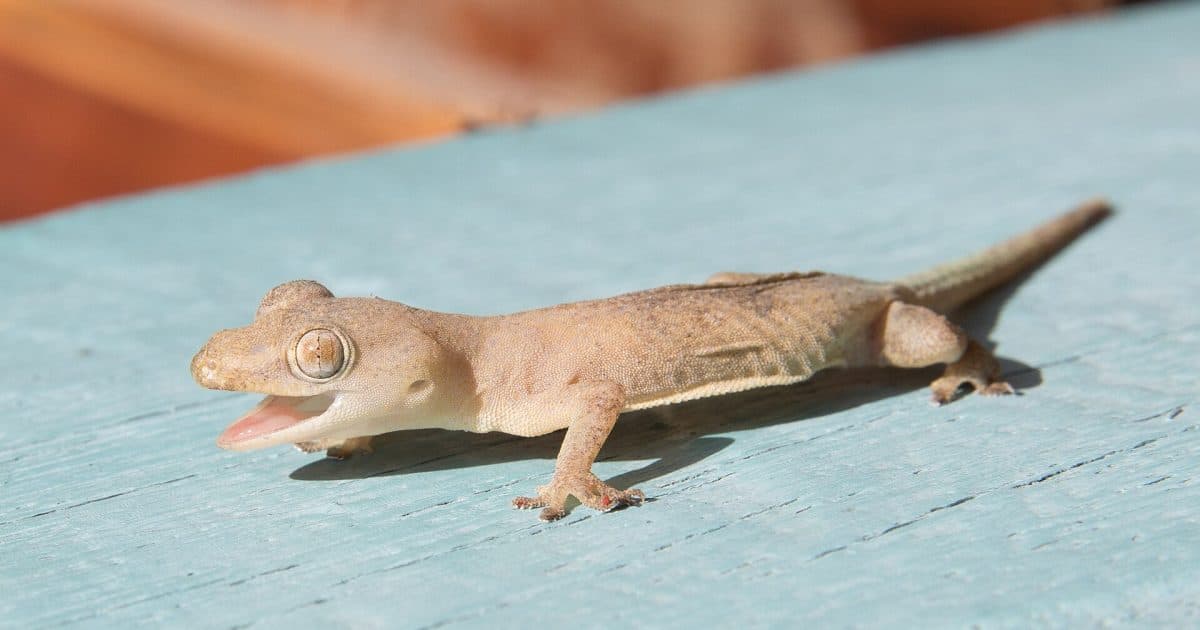
Not every lizard on your wall is the same animal, and knowing how to get rid of gecko lizards in the house starts with correctly identifying what you are actually dealing with. Kerala homes host at least three distinct reptiles that get lumped together as lizards: the common house gecko, the ground dwelling skink, and, occasionally, a monitor lizard. Each behaves differently, poses a different level of risk, and calls for a different response as part of a wider approach to lizard control services in Kerala. This guide walks through how to tell them apart, what each sighting actually means, and when professional help is worth calling in.
Key Takeaways
- House geckos (Hemidactylus) are Kerala's most common indoor lizard, climbing walls and ceilings and posing no real danger beyond nuisance.
- Skinks stay near the ground and are often mistaken for geckos, but they rarely climb and need different exclusion tactics than a typical skink lizard mix up assumes.
- A confirmed monitor lizard sighting is rare and should always go to a professional team, not DIY house lizard control.
House Geckos: Kerala's Most Common Wall Lizard
The house gecko, genus Hemidactylus, is the lizard almost every Kerala household actually means when they say they have a lizard problem.
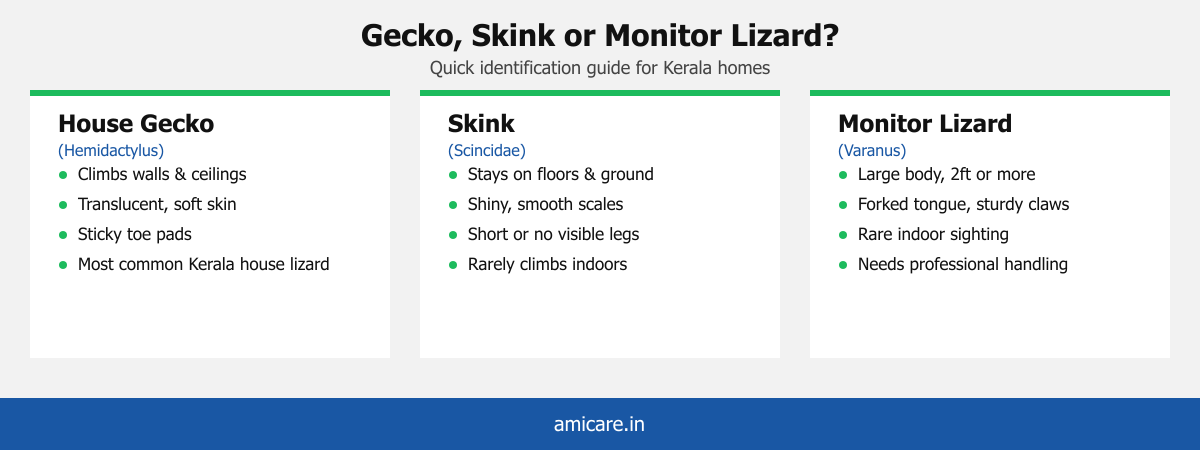
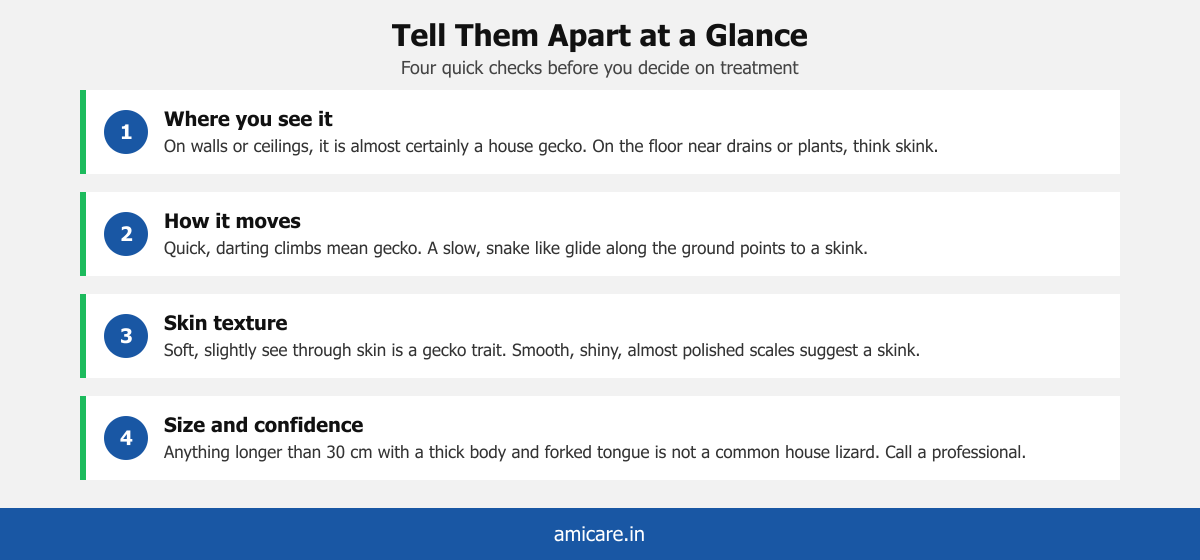
Most of what residents call a house lizard in Kerala is a house gecko, a small, pale, translucent skinned reptile that clings to walls and ceilings using sticky toe pads. Members of the genus Hemidactylus hunt insects drawn to indoor lighting, which is why they cluster near bulbs, kitchen windows, and balcony lights after dusk. They rarely grow past ten to twelve centimetres, move in quick darting bursts, and freeze rather than flee when startled. Because they feed on mosquitoes, moths, and small roaches, a light gecko presence is not inherently harmful, but a growing population usually signals an easier insect food supply indoors, often tied to unscreened windows or uncovered kitchen waste. Understanding this species specifically matters, since most home remedies target geckos rather than skinks or monitor lizards, and using the wrong approach on the wrong species wastes both time and money. For readers dealing specifically with wall climbing geckos, our guide on how to get rid of lizards at home naturally covers exclusion and deterrent methods suited to this species.
Skinks: The Ground Dwelling Lookalike
Skinks are frequently mistaken for geckos, but their body shape, skin, and behaviour are distinctly different once you know what is a skink lizard and what to look for.
Unlike house geckos, skinks belong to the family Scincidae and rarely climb vertical surfaces. They have smooth, shiny, almost polished scales instead of soft translucent skin, short or barely visible legs, and a body that moves in a low, gliding motion rather than a scurry. Skinks are usually spotted near ground level, close to drains, potted plants, stacked firewood, or damp corners of a store room, rather than on walls or ceilings. Because Kerala's warm, humid climate supports a large insect population at ground level too, skinks are drawn indoors by the same easy food supply that attracts geckos, just through a different entry point, typically gaps at floor level or around door thresholds. Exclusion strategies that work for wall climbing geckos, such as sealing gaps near ceiling fixtures, do little for a skink problem, which needs floor level sealing and moisture control instead. If ground level sightings are frequent, it is worth reading why Kerala homes attract so many lizards in the first place to address the underlying conditions rather than just the symptom.
Monitor Lizards: Rare But Real Sightings in Kerala Homes
Occasionally a call about a giant lizard turns out to be a young monitor lizard, and this is the one case that always warrants a professional response.
True monitor lizard sightings inside homes are uncommon in Kerala but do happen, particularly in properties near canals, paddy fields, or wooded plots on the city outskirts. A monitor lizard is unmistakably larger than a gecko or skink, often thirty centimetres or more, with a thick muscular tail, visible claws, and a long forked tongue it flicks to sense its surroundings. Unlike geckos and skinks, monitor lizards are wild animals rather than habitual house dwellers, and an indoor sighting usually means one has wandered in through an open door, drainage line, or garden connection while hunting. Because monitor lizards can be defensive if cornered and are a protected species under Indian wildlife law in many regions, residents should never attempt to trap, strike, or handle one directly. The correct response is to keep people and pets away, leave an exit route open, and contact a professional pest control team experienced in safe wildlife handling, rather than searching for how to get rid of monitor lizards through home remedies meant for geckos.
Why Correct Identification Changes Your Treatment Plan
Geckos, skinks, and monitor lizards enter through different points and respond to different deterrents, so misidentifying the species usually means the fix fails.
Pest control, including lizard management, works best when the treatment matches the actual species and its entry behaviour. A gecko problem responds well to sealing high level gaps, adjusting outdoor lighting to draw insects away from entry points, and reducing the insect population that feeds them. A skink problem instead needs floor level sealing, moisture reduction, and clearing ground clutter where they hide. Treating a skink issue with gecko focused fixes, or vice versa, usually leaves the underlying entry point untouched and the lizard population unchanged within weeks. This is also why generic online advice about house lizard control often underperforms: it rarely distinguishes between species and instead offers one blanket method for every sighting. A trained technician identifies the species first, traces the specific entry and food source, and applies a targeted approach, which is a meaningfully different process from a household spray bought off a shelf. For readers who want a broader look at gecko species and their typical indoor behaviour, this is a useful general reference point before deciding on a treatment plan.
DIY Detection vs Professional Lizard Control Services in Kochi
Identification is only step one. Choosing between a home remedy and a professional service depends on species, scale, and how quickly the problem needs to be resolved.
Once the species is identified, the next decision is whether to handle it yourself or call in a professional. A handful of geckos around a single porch light is often manageable with basic deterrents and exclusion. A recurring skink problem near drains, a growing gecko population across multiple rooms, or any monitor lizard sighting are situations where DIY methods typically fall short, either because the root cause has not been addressed, or because the species itself needs safe, trained handling. Amicare's professional lizard control services in Kochi start with exactly this kind of identification step, followed by a targeted treatment plan rather than a one size fits all spray. For a closer comparison of what each route actually involves, see our detailed breakdown of DIY vs professional lizard pest control. Choosing correctly the first time saves both the cost of repeat treatments and the frustration of a problem that keeps resurfacing under a different name.
Conclusion
Correctly identifying whether you are dealing with a house gecko, a skink, or the rare monitor lizard is the single most useful step before choosing any treatment, since each species enters differently, feeds differently, and responds to a different fix. If sightings keep recurring despite basic deterrents, or if you are ever uncertain about a larger or unfamiliar lizard, it is worth getting a professional opinion rather than guessing. Amicare's ISO certified technicians can confirm the species and recommend the right approach for your home. Contact Amicare Services today to schedule an inspection and put an end to repeat lizard sightings for good.
Frequently Asked Questions
How to get rid of gecko lizards in the house without harming them?
Reduce insect activity near lights, seal small wall and ceiling gaps, and use natural deterrents such as garlic or onion spray near entry points. Geckos hunt insects, so removing their food source works better long term than direct removal attempts.
What is a skink lizard and how is it different from a gecko?
A skink is a smooth scaled, ground dwelling lizard from the Scincidae family. Unlike geckos, skinks rarely climb walls, move with a low gliding motion, and are usually found near drains, plants, or floor level clutter.
How to get rid of monitor lizards safely?
Never attempt to trap or handle a monitor lizard yourself. Keep pets and children away, leave a clear exit path, and contact a professional pest control team experienced in safe wildlife handling for removal.
Are house geckos dangerous to have indoors?
House geckos are generally harmless and even helpful, since they feed on mosquitoes and small insects. They do not bite humans aggressively or carry known disease risks, though large populations indicate an underlying insect problem.
Can skinks climb walls like geckos do?
No. Skinks lack the sticky toe pads geckos use to climb smooth vertical surfaces. They stay on the ground or low furniture, which is one of the clearest ways to tell the two species apart.
Why do I keep seeing lizards near my kitchen lights?
Kitchen and porch lights attract insects after dark, and geckos gather nearby to feed on them. This is a food source issue rather than a structural one, covered in more depth in our lizard urine and kitchen health guide.
How can I tell if a lizard sighting needs a professional?
If sightings recur despite basic deterrents, involve multiple rooms, or the lizard is unusually large, it is time to call a professional. Learn more about Amicare's process in our guide to choosing an ISO certified pest control company.
Do lizards indicate a bigger pest problem at home?
Often yes. A rising gecko or skink population usually means there is an ample insect food source indoors, such as unscreened windows, exposed food waste, or damp corners, worth addressing alongside the lizards themselves.
What attracts lizards into homes in Kerala specifically?
Kerala's warm, humid climate supports year round insect activity, which draws geckos and skinks indoors in search of food. Homes near vegetation, water sources, or with unsealed entry points see lizards more frequently.
Is it normal to see lizards every day in Kerala homes?
Occasional sightings are common across Kerala due to the climate and insect activity. Frequent daily sightings across multiple rooms suggest a growing population worth addressing through professional identification and targeted treatment.