How to Get Rid of Lizards at Home Naturally
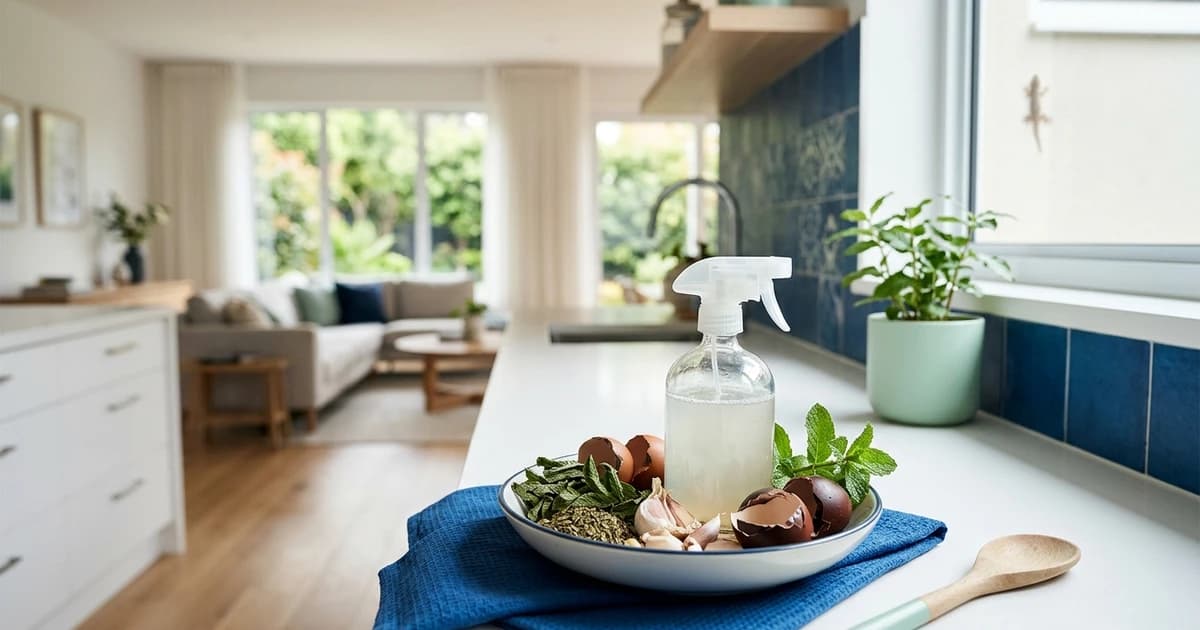
Finding a lizard darting across your kitchen wall is one of the most common complaints among Kerala homeowners, and most people want to know how to get rid of lizards at home naturally before reaching for anything harsher. The warm, humid climate across Kochi, Ernakulam and the wider state keeps insect populations high year round, and lizards simply follow that food supply straight into living rooms, kitchens and store rooms.
The good news is that several safe, low-cost home remedies can make your house far less inviting to lizards without any chemical spray. This guide walks through six natural deterrents Kerala families already rely on, explains the reasoning behind each one, and points out the moment when a persistent infestation is better handled by a professional rather than another round of home remedies. For a broader overview of every method covered here and more, see our complete Kerala lizard control guide.
Key Takeaways
- Smell-based deterrents like naphthalene, onion and garlic disrupt the scent trails lizards use to navigate indoors.
- Reducing insect-attracting light at night removes the food source that draws lizards indoors in the first place.
- Sealing physical entry points is the only remedy on this list that offers lasting, not just temporary, results.
Why Lizards Enter Kerala Homes in the First Place
Kerala's warm, humid climate supports large populations of moths, mosquitoes and small insects throughout the year, and lizards follow that food supply indoors without hesitation. Homes near gardens, water bodies, compound walls with dense vegetation, or bright outdoor lighting tend to see the most activity, because insects gather at the light source and lizards simply wait nearby to feed.
The species most commonly seen in Kerala kitchens is the common house gecko, well adapted to living alongside humans and feeding on the insects that gather around indoor lighting. Cracks around window frames, unsealed pipe entries, gaps under doors and even small openings around exhaust fans give it easy access to the inside of a house. Once inside, steady insect activity near kitchen counters and warm, undisturbed hiding spots behind furniture, refrigerators or wall-mounted shelves give it little reason to leave voluntarily.
Understanding this cause-and-effect relationship, insects first, lizards second, is exactly why the most effective natural remedies attack both the scent trail lizards follow and the food source that draws them in, rather than only masking the lizard itself. Homes built close to open drainage, unmaintained compound vegetation or stagnant water sources tend to see a noticeably higher baseline of both insects and lizards, which is worth factoring in before assuming a remedy has failed.
Naphthalene Ball Sachets
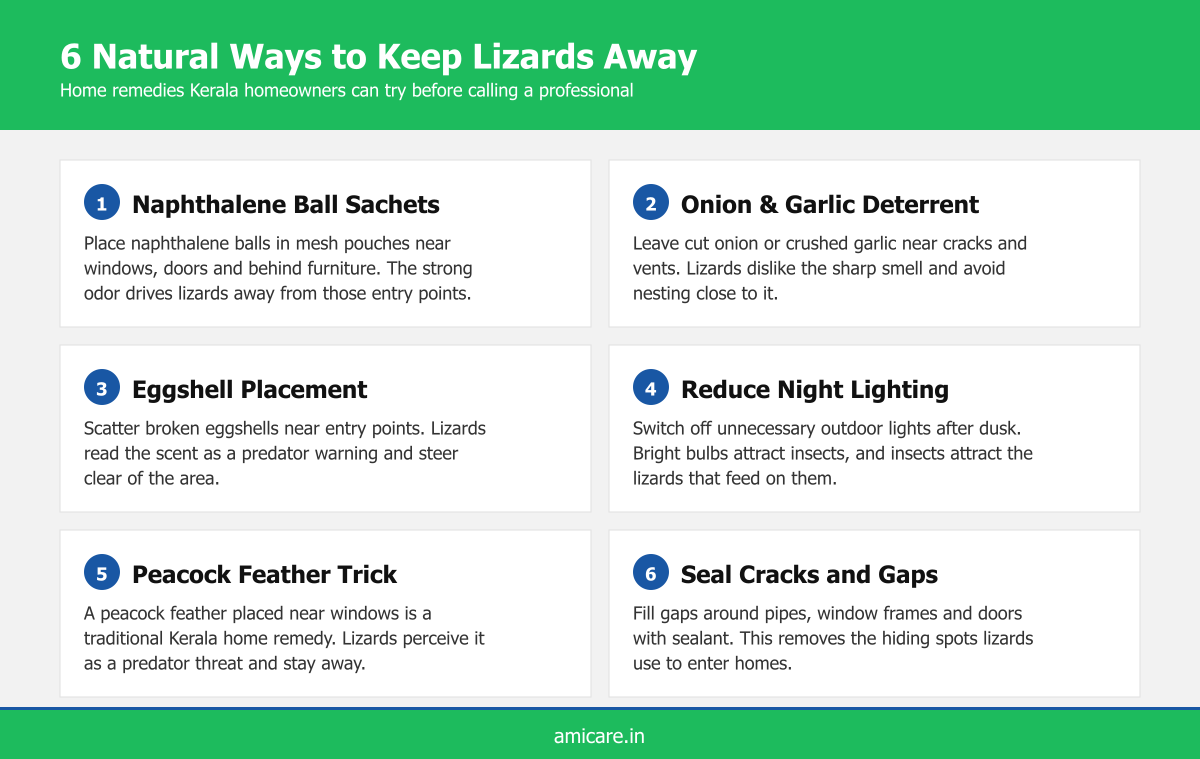
Naphthalene balls lizard remedies are probably the most widely used trick in Kerala households, and for good reason. Placing a few naphthalene balls in a small breathable mesh pouch near windows, doors, and behind cupboards creates a strong, sustained odor that lizards actively avoid, since their navigation depends heavily on scent rather than sight.
For best results, position sachets at every known entry point rather than just one or two spots, since a single treated corner still leaves the rest of the room accessible. Replace the sachets every two to three weeks as the scent fades noticeably faster in Kerala's humidity than in drier climates, and check behind large appliances and wall units where lizards tend to settle undisturbed for long stretches.
Keep naphthalene sachets away from areas where children or pets could reach them directly, since naphthalene is designed to repel through smell alone and is harmful if ingested or handled without protection. A sealed pouch tucked behind furniture achieves the same repellent effect far more safely than loose balls left in the open.
Onion, Garlic and Eggshell Deterrents
Cut onion or crushed garlic placed near cracks, vents and skirting boards works on the same principle as naphthalene: lizards rely heavily on smell to judge whether an area is safe, and pungent kitchen ingredients disrupt that judgment. Many Kerala households already keep onion or garlic on hand, which makes this one of the easiest remedies to try the same day a lizard is spotted.
Some households also scatter broken eggshells near entry points and windowsills, since lizards appear to read the lingering scent as a sign of predator activity nearby and avoid the area as a result. While the scientific evidence for eggshells specifically is thinner than for naphthalene or onion, it remains a low-cost addition worth trying alongside the other methods.
These kitchen-ingredient remedies are inexpensive, immediate and easy to combine, though all of them fade within a few days in humid conditions. They work best as one layer of a broader strategy rather than a standalone fix, particularly when paired with the lighting and sealing steps covered below.
Reduce Night Lighting and Insect Activity
Since lizards are really chasing insects rather than your home itself, cutting off the insect supply is one of the most effective long-term lizard repellent strategies available to homeowners. Switch off porch lights, balcony bulbs and any unnecessary outdoor lighting after dusk, or replace white bulbs with yellow "insect-repellent" LED bulbs that attract noticeably fewer moths and mosquitoes.
Keeping kitchen counters free of food residue overnight, covering fruit bowls, and sealing dry-goods containers also reduces the insects that draw lizards toward the kitchen specifically, which is usually the room with the highest sighting frequency in Kerala homes.
Combined, a darker exterior at night and a cleaner kitchen surface remove much of the incentive for lizards to linger indoors at all, even before any scent-based deterrent is introduced. Many households notice this single change produces a bigger drop in sightings than any sachet or spray, simply because it removes the underlying reason the lizard came inside in the first place.
Seal Entry Points for a Lasting Fix
Smell-based remedies wear off within days, but sealing gaps around pipes, window frames, exhaust fans and door thresholds removes the physical access lizards need to enter in the first place. This single step is the closest a homeowner can get to a permanent solution without professional treatment, because it addresses the root cause rather than temporarily discouraging entry.
Silicone sealant, door sweeps and fine wire mesh over vents are the most common materials used for this work, and most gaps can be identified with a simple evening walk-through using a flashlight, since lizards tend to reveal their entry routes by where they are most frequently spotted. Older homes with original wooden window frames or aging pipe fittings usually have more of these small gaps than newer construction, so a slightly more thorough check is worth the extra time there.
For a deeper, room-by-room walkthrough of kitchen-specific sealing, read our guide on lizard-proofing your kitchen and store rooms, which covers the exact spots pest control technicians check first during a professional inspection.
When Home Remedies Stop Being Enough
Home remedies work well for occasional sightings and light activity, but a home with lizards appearing daily, visibly breeding behind appliances, or returning within days of every treatment attempt usually has a larger entry-point or food-source problem than DIY methods alone can resolve.
At that stage, a same-day professional lizard control service in Kochi that combines targeted treatment with proper entry-point sealing tends to outperform repeated rounds of home remedies, both in speed and in how long the results actually last. This broader integrated pest management approach, treating the entry points and food source alongside the lizard itself, is exactly what separates a lasting professional fix from a temporary home remedy.
See our full comparison of DIY versus professional lizard pest control for a clearer picture of exactly where that line sits, and what a professional visit typically includes that a home remedy cannot replicate on its own.
Conclusion
Natural remedies like naphthalene sachets, onion and garlic, reduced night lighting, and sealed entry points can meaningfully cut down lizard sightings in most Kerala homes, especially when used together rather than in isolation. None of them are instant fixes, and most need two to three weeks of consistent use before the difference becomes obvious, so patience matters as much as the remedy itself. For a home that keeps attracting lizards despite these steps, Amicare's ISO-certified, government-approved lizard control services in Kerala combine safe, targeted treatment with lasting prevention work. Contact Amicare today to book a professional inspection and put an end to repeated lizard sightings for good.
Frequently Asked Questions
How do I get rid of lizards at home naturally without chemicals?
Use naphthalene or onion sachets near entry points, reduce night lighting that attracts insects, and seal cracks around windows and pipes. Combining all three together gives the most reliable natural results for most Kerala homes.
Do naphthalene balls actually keep lizards away?
Yes, in most cases they work well. Lizards navigate largely by scent, and naphthalene's strong odor disrupts that navigation significantly. Effectiveness fades over roughly two to three weeks in Kerala's humidity, so sachets need regular replacing for consistent, lasting results.
What smells do lizards hate the most?
Lizards commonly avoid naphthalene, onion, garlic, and to a lesser extent coffee grounds and eggshells. These strong scents mask the trails lizards use to find food and shelter, making the treated area feel far less appealing to enter.
Why do lizards keep coming back even after home remedies?
Unsealed entry points and ongoing insect activity are the usual root causes. Smell-based remedies fade within days, so without also sealing gaps around windows, pipes and doors, lizards simply return once the odor weakens noticeably.
Is it safe to use naphthalene balls if I have small children or pets?
Naphthalene should always be placed in enclosed, breathable sachets well out of reach of children and pets, since direct contact or ingestion is genuinely harmful. Sealed, ventilated placement, not loose open exposure, is essential for safety.
Do lizards bite or carry disease?
House geckos rarely bite humans and are not considered major disease vectors in most public health literature, though their droppings can contaminate open food surfaces over time. Even so, most households still prefer to keep them out of kitchens.
What attracts lizards to a kitchen specifically?
Kitchens combine warmth, food residue and steady insect activity, all of which draw lizards more consistently than any other room in the house. Keeping counters clean and covering food overnight removes much of that appeal fairly quickly.
How long does it take for lizard repellents to work?
Most natural repellents show a noticeable drop in sightings within three to five days, though full results depend heavily on how many entry points remain unsealed. Consistent reapplication speeds up the timeline considerably.
Can indoor plants attract more lizards?
Indoor plants can attract small insects that lizards feed on, indirectly increasing lizard activity nearby over time. Regular pest checks on houseplants and soil help limit this effect in most homes.
When should I call a professional instead of using home remedies?
If lizards return daily, appear to be breeding indoors, or home remedies stop working within days of application, it is time for professional pest control rather than continuing repeated DIY attempts alone.