Is Lizard Urine Dangerous? Health Risks, Myths and Facts for Kerala Kitchens

Many Kerala homeowners feel a jolt of worry the moment they discover lizard urine on skin or across a kitchen counter, especially near food. House geckos live in almost every home across the state, and understanding exactly what their waste contains, and what it does not, helps families respond calmly instead of reacting out of fear. This guide separates verified health facts from the folk beliefs that circulate about lizard urine, droppings, and disease, and walks through the simple, hygienic cleanup steps that keep a Kerala kitchen genuinely safe for everyone in the household.
Key Takeaways
- Lizard urine on skin is rarely a serious health risk if the area is washed with soap and water soon after contact.
- Most lizard disease myths in Kerala homes, including claims of skin poisoning, are not supported by verified medical evidence.
- The real hygiene concern is food contamination, not direct skin contact, which makes kitchen cleaning habits the most important prevention step.
What Lizard Urine and Droppings Actually Contain
House geckos, the small, pale lizard species found in nearly every Kerala home, belong to the Hemidactylus family, one of the most common gecko genera worldwide. Unlike mammals, lizards do not produce urine and solid waste separately. Instead, they release a small liquid deposit together with a solid white uric acid pellet in a single dropping, which is why what looks alarming on a kitchen counter is usually a small, dry residue rather than a large puddle.
Like the waste of any small animal that moves through drains, roof spaces, and outdoor areas, lizard droppings can occasionally carry bacteria picked up from the surfaces the gecko has walked across. This is a general hygiene consideration rather than something unique to lizards. There is no verified medical evidence that brief contact with dried gecko waste, cleaned up promptly with normal household hygiene, causes measurable illness in a healthy adult. The actual volume of waste from a single house gecko is also very small compared to rodents or larger pests, which limits the scale of any real hygiene concern. Recognizing this difference is the first step toward a calm, hygienic response instead of an alarmed one.
House geckos are also nocturnal and tend to stay near light fixtures and window frames where insects gather, rather than deliberately seeking out food storage areas. Most sightings on a kitchen counter happen because a gecko was hunting insects nearby, not because it was drawn to stored food itself. Understanding this behavior helps explain why droppings usually appear near lights, shelves, and corners rather than scattered across an entire kitchen, and why targeted cleaning of those specific spots is more effective than an exhaustive daily scrub of the whole room.
Is Lizard Urine on Skin Actually Dangerous? Separating Myth From Fact
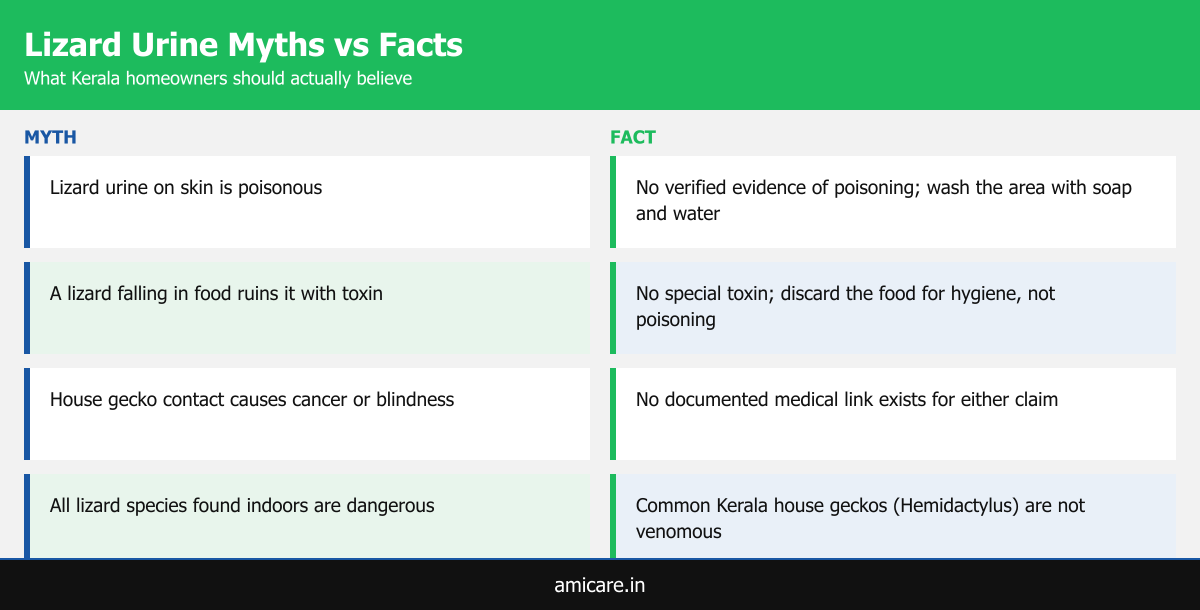
Getting lizard urine on skin is unpleasant, and the instinct to worry is understandable, but current evidence does not show that it causes poisoning or serious illness in humans. Ordinary hygiene practice, washing the affected area with soap and water for around twenty seconds, is enough to address the vast majority of incidental contact.
The belief that lizards are poisonous to the touch is widespread across Kerala and much of India, but it is largely rooted in folk tradition rather than documented medical cases. There is no scientific consensus linking casual house gecko contact with skin poisoning, chemical burns, or systemic illness. Amicare's professional lizard control team regularly fields questions from worried homeowners on exactly this point, and the guidance from public health sources is consistent: treat lizard urine on skin the way you would treat contact with any household pest waste, with prompt washing rather than panic. If a rash, unusual irritation, or other symptoms develop after contact, seeing a doctor is a sensible precaution, as it would be for contact with any unidentified residue, not because lizard waste specifically requires it.
Common Lizard Disease Myths in Kerala Homes
Beyond the poisoning myth, several other lizard disease myths persist across Kerala households. One common belief holds that repeated exposure to house geckos causes cancer or blindness over time. Neither claim has any documented medical basis, and no peer reviewed research connects casual gecko presence in a home to either condition.
Another widespread myth is that a lizard falling into a pot of food instantly contaminates the entire dish with a lethal toxin. In reality, there is no special toxin involved. The food should still be discarded, but for ordinary hygiene reasons, not because of any unique lizard poison. Readers who want a practical answer to lizard problems at home, rather than folklore, can review our guide on natural ways to get rid of lizards at home, which covers safe, non-toxic deterrent methods that work well in Kerala’s climate. Fear driven reactions, like using harsh chemicals near food storage, often create more risk than the lizard itself ever did, which is also why understanding common DIY pest control mistakes is worth doing before attempting a home remedy.
These myths tend to persist because lizards are highly visible pests that appear suddenly and move quickly, which triggers a stronger emotional reaction than, say, a less visible pest like a stored product insect. That visibility does not correlate with actual health risk. Most Kerala households encounter house geckos far more often than they encounter genuinely hazardous pests, yet the disproportionate fear response often means lizards get treated as a bigger threat than cockroach infestations or rodent activity, both of which carry better documented health risks when left unmanaged.
Real Health Risks: Food Contamination and Kitchen Hygiene
While direct skin contact with lizard urine carries low individual risk, food contamination is the more genuine concern in a working kitchen. Any pest, lizard, insect, or rodent, that comes into contact with an exposed food surface introduces a general contamination risk, and lizard droppings are no exception. Bacteria can theoretically be transferred through contact with contaminated surfaces, which is why food safety authorities recommend covering stored food, wiping down counters regularly, and discarding any food item a lizard has directly touched.
India’s FSSAI food safety guidance and general public health recommendations both emphasize the same core principle for any pest related contamination: prevention and prompt cleaning matter far more than panic after the fact. For a Kerala household, that means keeping kitchen surfaces clear of clutter where geckos like to hide, storing dry goods in sealed containers, and closing gaps around windows and drains that let lizards enter in the first place. Our complete guide to lizard control and prevention in Kerala homes covers these entry points in more detail, along with a room by room prevention checklist. These same hygiene habits also reduce risk from cockroaches, ants, and other common household pests, making them a sound long term investment regardless of which pest is currently causing concern.
How to Clean Up Safely After a Lizard Encounter
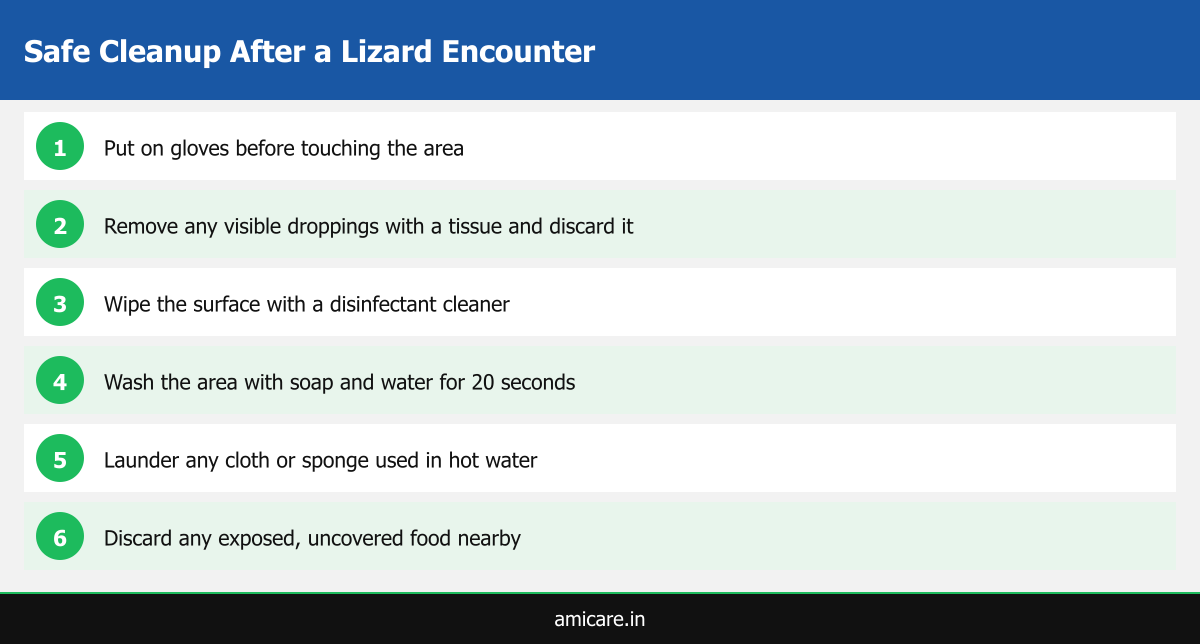
A calm, methodical cleanup is more effective than an anxious scrub with whatever cleaner is nearest. Start by putting on gloves before touching the affected area, then remove any visible droppings with a tissue and discard it immediately rather than sweeping residue further across a counter. Wipe the surface with a standard disinfectant cleaner, then wash the area again with soap and water.
Any cloth, sponge, or towel used during cleanup should be laundered in hot water afterward rather than reused on other surfaces. If the encounter happened near open food, discard anything that was left uncovered and exposed, even if it looks untouched. For households that keep finding lizards in the kitchen despite regular cleaning, the underlying issue is usually entry points rather than hygiene, and our guide to lizard-proofing your kitchen and store rooms walks through sealing the gaps, drains, and vents that let geckos in to begin with. Combining prompt cleanup with entry point prevention addresses both the immediate concern and the reason it keeps happening.
Conclusion
Lizard urine on skin, lizard droppings near food, and the fear that surrounds them are far more manageable once the actual facts are clear. The real risk sits in food contamination and repeat infestation, not in casual contact, which is why consistent kitchen hygiene and sealing entry points matter more than any home remedy circulating online. If lizards keep returning to your kitchen despite regular cleaning, Amicare’s ISO certified team can assess entry points and recommend a safe, lasting solution. Contact Amicare today to schedule a professional lizard inspection for your Kerala home.
Frequently Asked Questions
Is lizard urine on skin dangerous?
No. Current evidence does not show that lizard urine on skin causes poisoning or serious illness. Washing the area with soap and water is generally enough. Seek medical advice only if irritation or unusual symptoms develop afterward.
Are house lizards poisonous?
No verified evidence supports the common belief that Kerala house geckos are poisonous to touch. This idea comes largely from folklore rather than documented medical cases, and no scientific study links casual household contact to poisoning.
Can a lizard falling into food make it dangerous to eat?
There is no special toxin involved. The food should still be discarded because a lizard walking through it introduces general contamination, the same hygiene reasoning that applies to any pest touching an open food item.
Do house lizards carry diseases that spread to humans?
House geckos are not established as significant disease vectors for humans. Like any small animal, they can carry incidental bacteria, which is why prompt cleaning after contact, not fear, is the appropriate response.
What should I do if lizard droppings are found near food?
Discard any food that was left uncovered and exposed to the dropping. Clean the surface with a disinfectant, then wash the area with soap and water. Regular kitchen hygiene habits prevent repeat issues over time.
Can lizard urine cause skin allergies or rashes?
Reactions are uncommon but not impossible for sensitive skin. If irritation, redness, or a rash develops after contact, wash the area thoroughly and consult a doctor if symptoms persist beyond a day or two.
Are Kerala house geckos venomous?
No. Common Kerala house geckos belong to the Hemidactylus genus and are not venomous. They pose no bite risk to humans under normal circumstances and are generally more interested in avoiding contact than initiating it.
How do I clean lizard urine off kitchen surfaces safely?
Wear gloves, remove visible residue with a tissue, disinfect the surface, then wash with soap and water. Launder any cloth used afterward in hot water rather than reusing it elsewhere in the kitchen.
When should I see a doctor after contact with lizard urine?
A doctor visit is rarely necessary, but is a reasonable precaution if a rash, swelling, or unusual irritation develops and does not resolve after washing. Amicare also recommends reviewing our guide on why regular pest management matters for a healthier home overall.
Does professional pest control reduce lizard related hygiene risks at home?
Yes. Sealing entry points and removing hiding spots reduces both lizard sightings and the cleanup they require. Our comparison of DIY versus professional lizard pest control explains when a professional visit is worth it.