Termite Treatment for Modular Kitchens, Plywood and MDF
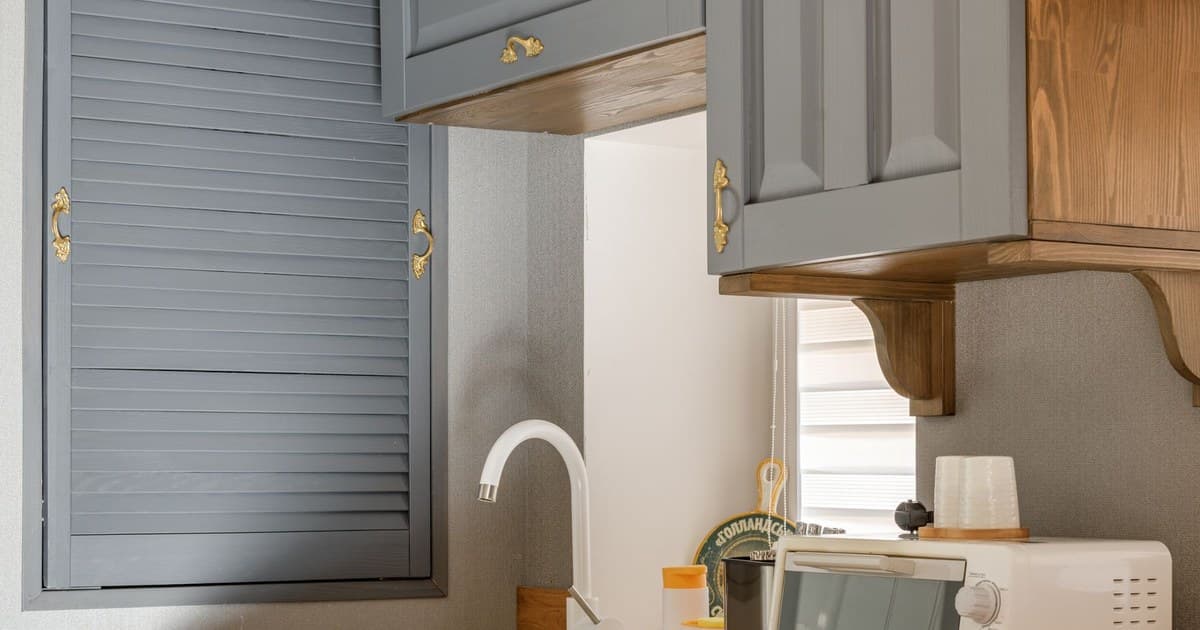
Termite treatment on wood used to mean solid timber, roof rafters and door frames. In modern Kerala homes the bigger exposure is engineered board. Modular kitchens, wardrobes and storage units are built from plywood, MDF and particle board, and they sit against masonry in the most humid rooms in the house. That combination is more vulnerable than most owners realise.
Key Takeaways
- Engineered board is often more vulnerable than solid timber, because the adhesive layers and sapwood content offer easy feeding.
- Modular units sit against damp masonry in kitchens and bathrooms, which is exactly where subterranean termites enter.
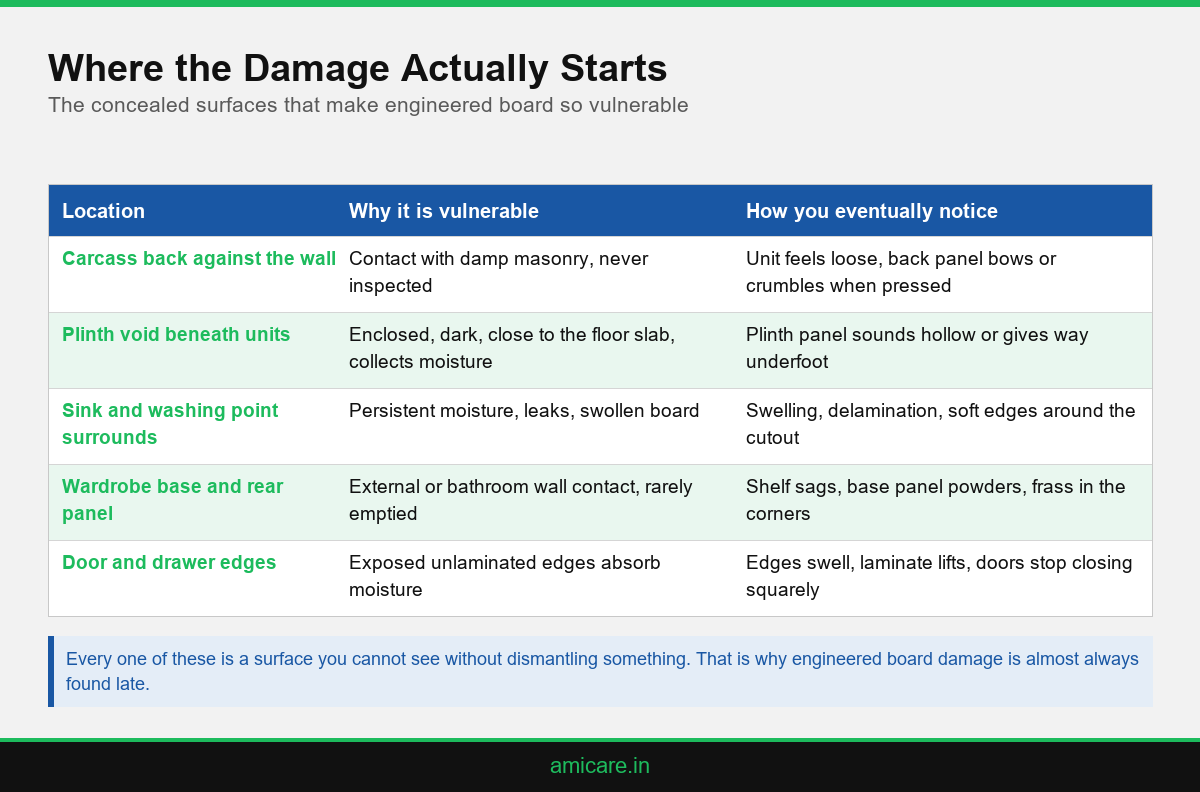
- Damage is concealed by design. Carcass backs, plinth voids and the wall side of a unit are invisible until failure.
- Prevention at fitout costs a fraction of treatment afterwards, because access is the main cost driver.
Why Engineered Board Is Not Safer Than Solid Wood
There is a widespread assumption that plywood and MDF are somehow less attractive to termites than solid timber. The opposite is frequently true. Both are cellulose, which is what termites digest, and both are typically manufactured from fast grown sapwood rather than durable heartwood.
MDF and particle board are particularly vulnerable because their structure is essentially compressed wood fibre. There is no grain direction to slow an insect down and no natural durability. Once moisture reaches the board it swells, softens and becomes easier to attack, and Kerala kitchens supply moisture continuously.
Plywood sits in between. Treated marine grade or boiling water resistant board with an appropriate preservative is genuinely more resistant. Untreated commercial grade plywood, which is what a great many fitouts actually use, is not, and the difference is invisible once the unit is installed and laminated.
Why Kitchens and Wardrobes Are the Entry Points
Location does most of the damage here. A modular kitchen runs along external and internal walls, sits on a plinth close to the floor slab, and surrounds a sink, a washing point and often a water purifier. Subterranean termites entering through the slab or the wall base arrive directly at the back of the carcass.
Bedroom wardrobes present a similar profile against an external wall, particularly on ground floors and in rooms that catch driving rain. Where a wardrobe backs onto a bathroom wall, moisture migrating through the masonry keeps the board damp on the hidden face while the visible face looks perfect.
The design compounds it. Carcass backs, the plinth void beneath the units and the gap between the unit and the wall are inaccessible by construction. Nobody looks there because nobody can, which is why these infestations are typically discovered when a shelf gives way or a door stops closing.
Telling Termite Damage From Water Damage
Kerala kitchens produce both, and they look similar at first glance. Water damage swells board evenly along an edge, causes laminate to lift and leaves a stained, soft but continuous material. The board is degraded but essentially still there.
Termite damage removes material. Press the surface and it gives way into a void rather than compressing. Tap along a panel and the note changes where the interior has been eaten out. In engineered board you often find a papery outer skin over a hollow, because the insects consume the core and leave the laminated face.
Look for the diagnostic evidence too. Mud packing inside a plinth void or on the back of a carcass is conclusive for subterranean termites. Small hard pellets suggest drywood activity. Fine flour like powder points instead to wood borer, which is a different problem covered in the guide to wood borer treatment.
What Treatment Is Realistic
The honest position is that treating an infested modular unit is harder and less certain than treating solid timber, because access is poor and the material is thin. What is achievable depends heavily on whether the source is subterranean or confined to the unit itself.
Where the source is subterranean, the priority is the building rather than the furniture. Soil treatment or baiting addresses the colony, injection treats the wall and plinth line, and the unit itself is treated where it can be reached. Without the soil work the same unit is reinfested through the same route.
Where the activity is drywood and confined to the joinery, targeted timber treatment can work well. Injection into galleries, treatment of exposed surfaces and, for badly tunnelled panels, replacement of individual components rather than the whole unit is usually the sensible balance.
When replacement beats treatment
A carcass back or plinth panel that has lost structural integrity is not worth treating, because even a successful treatment leaves a member that cannot carry load. Replacing individual panels while treating the surrounding structure is often both cheaper and more durable than attempting to preserve everything.
Getting It Right at Fitout
The cheapest protection for a modular kitchen is specified before it is built, and the cost difference is small relative to the total fitout. Three decisions carry most of the benefit and none of them are exotic.
Specify treated board rather than commercial grade, particularly for carcasses, plinths and anything in a wet zone. Insist on full edge banding, because unlaminated edges absorb moisture and are the usual entry point for the water that precedes the insects. And require a physical gap or a damp proof membrane between the carcass back and the masonry rather than fixing directly to a wall.
Ask the contractor to leave the plinth removable rather than sealed permanently. It costs nothing at fitout, and it converts the least accessible part of the kitchen into somewhere that can be inspected and treated later without dismantling the run. For anyone building or renovating, this belongs in the same conversation as protection for a newly built property.
What Owners Can Check Themselves
A few minutes twice a year catches most of these problems while they are still cheap. Empty the cabinet under the sink and look at the back panel and the floor of the unit with a torch, checking for mud, staining or soft board.
Press the plinth panels along their length. Sound board resists. Tap the carcass sides and listen for a change in note. Open the wardrobe, remove what is on the base and check the rear corners for frass or powder, which collects there because nothing disturbs it.
Outside the units, look at where the kitchen wall meets the floor externally and check for mud tubes on the plinth. Any of these findings justifies an inspection rather than a wait, because engineered board fails faster than solid timber once it is compromised. The broader checklist sits in the warning signs of termite infestation.
Keeping Moisture Away From the Board
Almost every engineered board failure in a Kerala kitchen begins with water rather than insects. Damp board swells, loses strength and becomes far more attractive to attack, so moisture control does more for the life of a modular kitchen than any chemical treatment.
Deal with leaks immediately rather than when convenient. A slow drip at a sink trap or a leaking water purifier connection soaks the carcass floor beneath, and because that surface is hidden the problem is usually discovered as a soft base rather than as a leak. Check under the sink with a torch once a month.
Ventilate where you can. Plinth vents, a small gap behind the carcass and simply opening cabinets occasionally all help board dry between wettings. A kitchen sealed tight against a masonry wall in a climate this humid keeps the hidden faces permanently damp.
Watch the wet zones specifically. The sink cutout, the washing machine surround, the dishwasher recess and any unit against a bathroom wall are where board fails first. Sealing the cutout edges properly at fitout, and resealing them when the silicone perishes, is a small maintenance job that prevents a large one.
Conclusion
Modern interiors moved the termite problem from the roof to the kitchen, and engineered board is not the safer material owners assume it to be. Specify treated board and proper edge banding at fitout, keep the plinth removable, and check the concealed faces twice a year. Where damage has started, treat the building as well as the furniture. Ask Amicare to inspect the concealed faces of your units rather than waiting for a shelf to fail.
Frequently Asked Questions
Are plywood and MDF safe from termites?

Why do modular kitchens get termites so often?
How do I tell termite damage from water damage in board?
Can an infested modular unit be treated or must it be replaced?
Does treated plywood actually help?
Why does edge banding matter?
Should the kitchen plinth be sealed or removable?
How often should I check my kitchen units?
Will treating the kitchen stop the problem?
Is this a problem in apartments as well?