What Happens During a Professional Cockroach Treatment
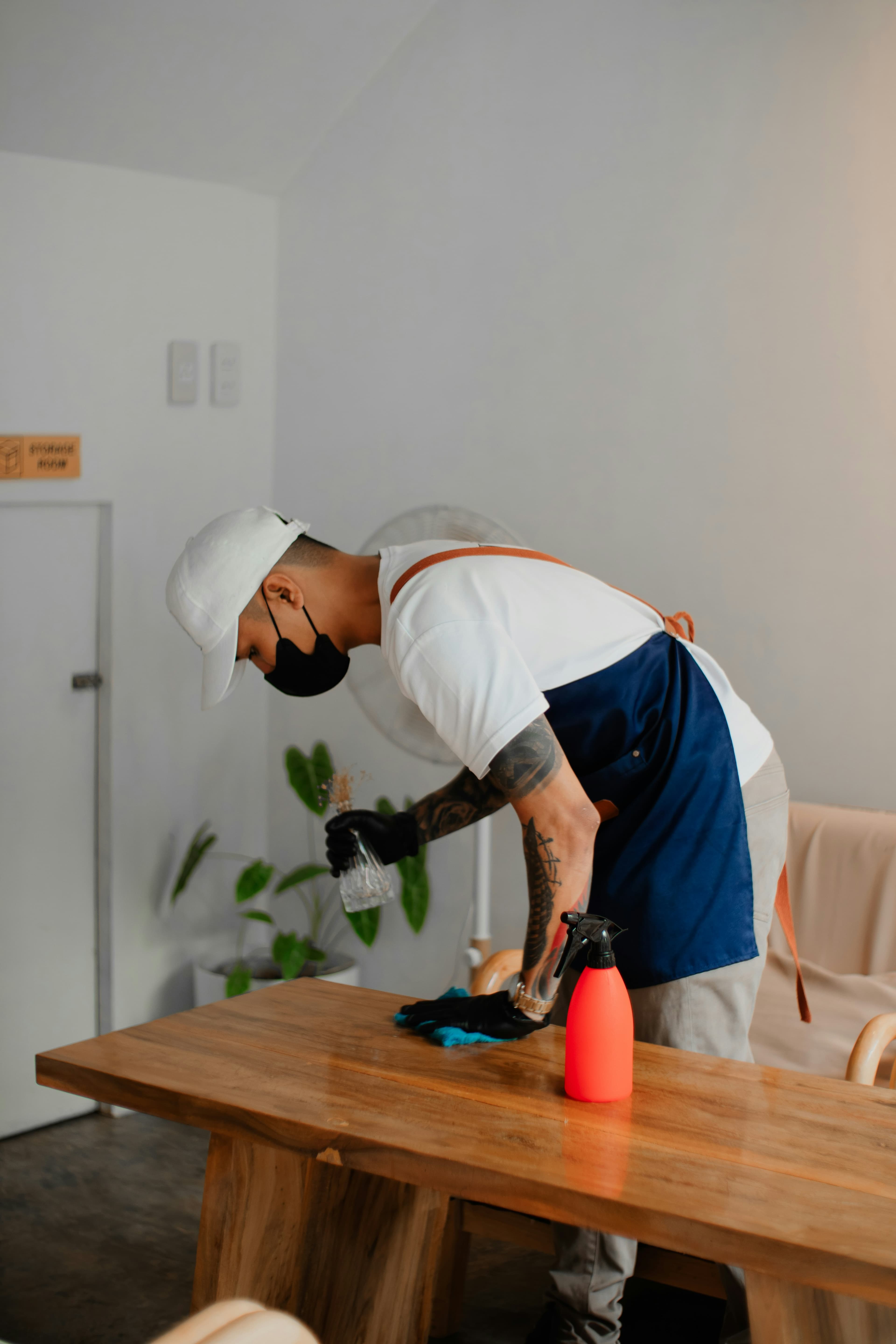
Most households book a treatment without knowing what a good one looks like, which makes it very hard to tell a thorough job from a fast one. The cockroach pest control process has a recognisable shape. It starts with inspection, it places product in specific places for specific reasons, and it ends with a briefing and a follow up date. A visit that skips those parts is not cheaper. It is incomplete.
Key Takeaways
- Inspection comes first and determines everything after it. A visit that begins with spraying has skipped the step that matters most.
- Expect more visible cockroaches in the first forty eight hours. That is bait working, not treatment failing.
- Do not deep clean treated cracks for two weeks. Washing away bait is the most common cause of underperformance.
Before the Visit: What You Need to Do
Preparation takes about twenty minutes and materially affects the result. Food and utensils are moved or covered, pet bowls are put away, and access is opened to the places the technician actually needs, which are cabinet backs, appliance gaps, sink units and floor traps rather than open floor.
The most useful thing a household can do is not clean thoroughly immediately beforehand. Droppings, smear marks and shed skins are the evidence a technician uses to locate harbourage. Removing them the morning of the visit erases the map.
It also helps to write down what you have seen and where over the previous fortnight. The room, the time of day and the approximate size of the insects give the technician a head start on the species and the harbourage, and that information is difficult to reconstruct during a single walk through.
The Five Stages of the Visit
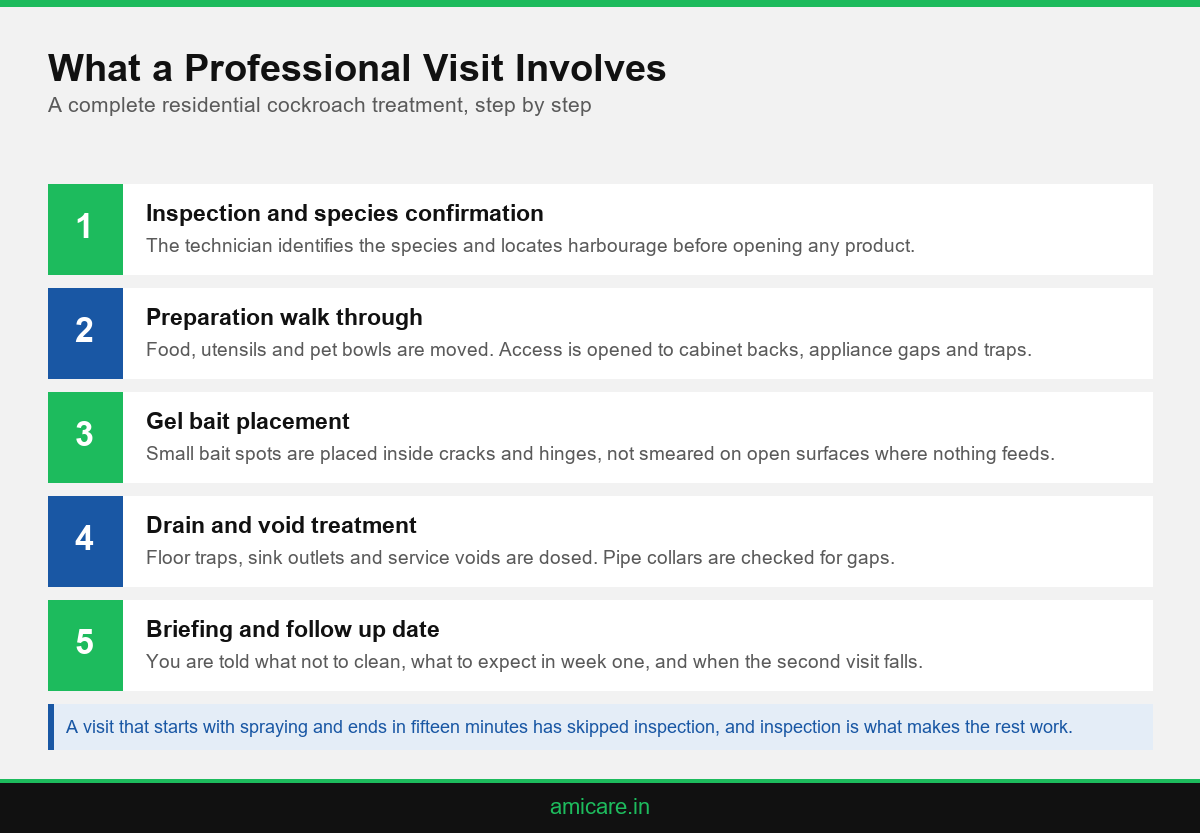
A complete residential treatment runs through five stages, and each one depends on the one before it. Inspection confirms the species and locates harbourage. Preparation opens access. Baiting, drain work and void treatment then follow, each targeted at a different zone.
The final stage is the briefing, and it is the one most often skipped. You should be told what not to clean, what to expect in the first week, and when the follow up visit falls, before the technician leaves.
Inspection is worth watching. A technician opening the sink unit, pulling the fridge forward and lifting a floor trap cover is looking in the places that matter. One who walks through the rooms without opening anything has decided the treatment before diagnosing the problem, and the product placement afterwards will reflect that.
What You Should See Afterwards
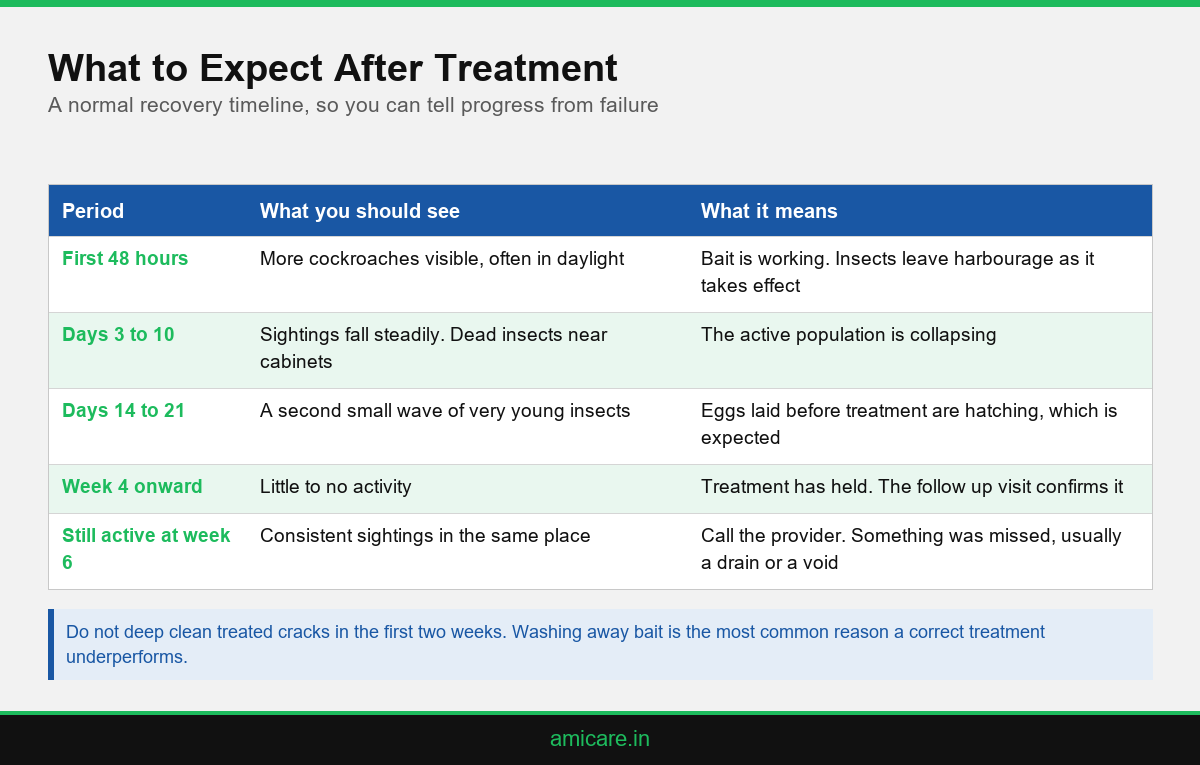
The first forty eight hours look like the treatment has made things worse. More insects are visible, often in daylight, because the bait drives them out of harbourage before it takes effect. This is the expected response and it is a sign the product has been found and fed on.
Sightings then fall steadily. A second small wave of very young insects around week three is also normal, because eggs laid before the treatment are hatching and no product reaches inside the protective case. That wave is precisely what the follow up visit exists to catch.
Knowing this timeline matters because it separates normal recovery from genuine failure. Consistent activity in the same location at week six is not part of the pattern. That indicates a missed harbourage point, and it is the moment to call the provider rather than to wait longer.
How to Tell a Complete Treatment From a Quick One
There are four reliable indicators. The technician inspected before opening any product. They can name the species and explain why the method follows from it. Bait was placed inside cracks and hinges rather than smeared on open surfaces. Drains and voids were treated, not just rooms.
A fifteen minute visit that consists of walking through spraying skirting boards meets none of these. It will suppress visible activity briefly and leave the reservoir intact, which is the mechanism behind infestations that return after treatment. Ask what was used and where, and expect a straight answer.
Strong smell is not evidence of thoroughness. Professional baits are close to odourless, and a heavy chemical smell usually indicates broadcast spraying rather than targeted placement. Households often read the smell as proof that something was done, when it is closer to the opposite.
Questions to Ask Before the Technician Leaves
The five minutes before a technician leaves are the most useful of the whole visit, and most households waste them. Five questions are worth asking, and the answers should be specific rather than general.
Ask which species was found and what indicated it. Ask which areas were treated and by what method, because the answer tells you whether drains and voids were included or only rooms. Ask which product was applied and where, which you are entitled to know and which a professional operator will answer without hesitation.
Ask what you should not clean and for how long. This is the single instruction that most often gets missed, and washing bait out of treated cracks in week one will undo an otherwise correct treatment. Finally, ask when the follow up visit falls and what happens if activity continues past week six.
Keep the answers. A short written note of the date, the species, the areas treated and the follow up date is useful if the problem persists, if you change provider, or if you are in an apartment where the association needs a record. It also makes the next technician considerably more effective, because they start with a history rather than a blank inspection.
What the Technician Is Actually Looking For
Watching an inspection is the fastest way to understand the cockroach pest control process, because the technician is reading the property rather than simply looking for insects. Almost all of the useful evidence is left behind rather than walking around.
Droppings are the primary signal. German cockroach droppings resemble coarse ground pepper and collect along the edges of shelves and inside cabinet corners. Their distribution maps the feeding route, which is where bait needs to go. American cockroach droppings are larger, more cylindrical, and typically found near drains and in service voids rather than in cabinets.
Smear marks are the second. These are dark irregular streaks where a vertical surface meets a horizontal one in a damp area, produced by insects repeatedly using the same run. A heavy smear indicates a well established route and tells the technician where to concentrate. Shed skins are the third, and they settle an important question, because their presence confirms the population is breeding on site rather than entering from elsewhere.
The fourth is egg cases, which are small, ridged and brown. Finding them changes the plan, because no product penetrates the case and their presence guarantees a hatch after treatment. That single observation is usually what determines whether a follow up visit is scheduled at three weeks or whether the property can be left on a longer review.
The technician is also reading the building itself rather than only the evidence. Where pipes pass through walls, whether floor traps hold water, how service ducts run between rooms and which appliances sit against an external wall all shape where a population can establish and how it will move once treatment starts. This is why an inspection that looks slow is usually the part doing the most work, and why documented method is one of the practical arguments for using a certified pest management provider rather than the cheapest available visit.
Conclusion
A professional treatment is a sequence, not an application. Inspection identifies the target, placement puts product where the insects actually live, and the follow up visit closes out the generation that hatches afterwards. If your last visit skipped those steps, the treatment was incomplete rather than unlucky. Book a treatment with a documented inspection and follow up and ask to see the plan before work starts.
Frequently Asked Questions
How long does the cockroach pest control process take?

Do I need to leave the house during treatment?
Should I clean before the technician arrives?
Why are there more cockroaches after the treatment?
When can I clean the treated areas?
Why is a follow up visit necessary?
Is the treatment safe around children and pets?
What if I still see cockroaches after six weeks?
Are the products used approved for indoor use?
Does a professional treatment use different products to retail sprays?