Termite Treatment Warranty: What Cover Actually Includes

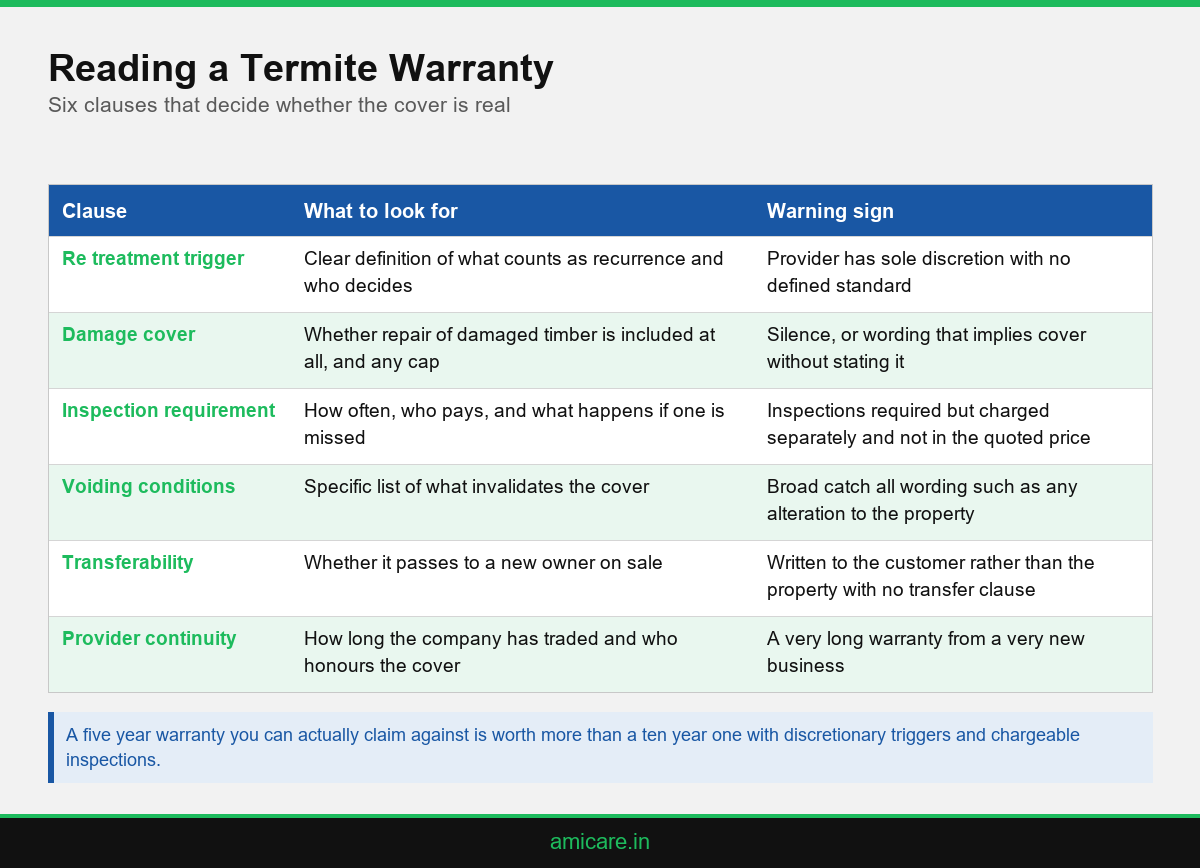
A termite treatment warranty is the part of a quotation buyers look at least carefully and rely on most heavily. Cover in Kerala ranges from one to ten years, and the headline number tells you very little. What matters is what triggers a re treatment, what quietly voids the cover, and whether the inspections that keep it alive are included in the price you agreed.
Key Takeaways
- Length is the least informative part. A five year warranty with clear terms beats a ten year one full of exclusions.
- Most warranties require scheduled inspections and lapse silently if they are missed.
- Disturbing treated soil is the commonest way homeowners void cover without realising it.
- Check whether the warranty transfers on sale. Many are written to the customer rather than the property.
- Most cover re treatment only. Repair of timber damaged during the period is a separate thing and is rarely included.
- Notify activity in writing and let the provider inspect first. Treating it yourself forfeits the claim.
What a Warranty Is Actually Promising
Read carefully and most termite warranties promise something narrower than buyers assume. The usual commitment is free re treatment if termite activity recurs in the treated areas during the period, subject to conditions. That is worth having, and it is not the same as a guarantee against damage.
The distinction matters because the two costs are very different. Re treatment means the provider returns and applies product again. Damage cover would mean paying to repair or replace timber that was eaten during the period, and very few Kerala warranties include it. Where damage cover exists it is usually capped and heavily conditioned.
Ask the question directly. Does this warranty cover re treatment only, or does it cover repair of damage caused by a failure of the treatment. The answer changes what the warranty is worth, and it should be in writing rather than discussed verbally at the point of sale.
Why Length Is the Least Useful Number
Providers compete on warranty length because it is the easiest thing for a buyer to compare, which is precisely why it is unreliable. A long warranty attached to conditions that are difficult to satisfy is worth less than a shorter one written plainly.
Look at what supports the number. A ten year warranty on a barrier treatment implies confidence that the barrier lasts ten years, which in Kerala rainfall and laterite soil is an ambitious claim unless it is backed by annual inspection and a re treatment provision partway through.
The more useful signal is whether the warranty period matches the technical reality of the method. Where a provider offers a long period without any scheduled intervention, either the inspections are hidden as a chargeable extra or the cover is written so that claiming is impractical.
What Quietly Voids the Cover
The commonest way a Kerala homeowner loses warranty cover is by disturbing treated soil without telling anyone. Building an extension, laying a path, trenching for a cable, replumbing a bathroom and landscaping against the plinth all break the barrier at that point, and most warranties exclude activity arising through a disturbed section.
The second is missed inspections. Where annual inspection is a condition, skipping one can lapse the cover entirely, and providers do not always chase. Homeowners frequently discover this at claim stage, two years after the inspection they forgot.
The third is unreported water. Persistent leaks and drainage that saturates the plinth accelerate barrier depletion, and many warranties exclude failure attributable to conditions the owner knew about and did not fix. The fourth is engaging another provider to treat the same property, which voids most warranties immediately.
Report work before it happens
Telling the provider before excavation or plumbing work lets them re treat the affected section cheaply and keep the cover intact. Telling them afterwards is more expensive. Not telling them at all converts a small maintenance item into a declined claim.
Inspections: The Condition That Keeps It Alive
Most meaningful warranties require periodic inspection, usually annual, and this is a reasonable condition rather than an upsell. The inspection is the mechanism by which a barrier gap is found before it becomes damage, which serves both parties.
What to check is whether the inspections are included in the price you agreed or charged separately. A quotation that looks competitive can become considerably less so once five annual inspections are added at a per visit rate, and that arithmetic should be done before signing rather than in year two.
Ask also what the inspection produces. A written report noting what was checked and what was found is evidence. A verbal all clear is not, and if you later need to demonstrate that inspections were carried out as required, the reports are what you will be asked for.
Transferability and Resale
This is the clause buyers ignore and sellers wish they had checked. Many Kerala termite warranties are written to the customer rather than to the property, and lapse when the property changes hands. Others transfer subject to notification and sometimes a fee.
A transferable warranty is a genuine asset at sale. It tells a buyer the property has been treated, by whom and when, and that the protection continues. In a market where pre purchase termite inspection is becoming more common, that documentation increasingly has negotiating value.
If you are buying, confirm transferability directly with the provider rather than relying on the seller's description. If you are selling, check the position early enough to complete any notification the warranty requires, because retrospective transfer is often refused.
Keeping Your Side of the Agreement
Warranty claims are usually assessed against records, so keep them. The treatment date, the product name and concentration, drill spacing, areas treated, the warranty document itself and every inspection report belong in one folder rather than scattered across emails.
Report changes as they happen. Structural work, plumbing, landscaping, a new leak or any evidence of activity should be notified in writing, and a short email creates the record that a phone call does not. This is also how you keep the provider's obligation live rather than giving them grounds to decline.
Finally, book the inspections rather than waiting to be reminded. Providers vary in how diligently they chase, and the consequence of a missed inspection falls on you rather than on them. A calendar reminder is a small thing that protects the whole arrangement.
Making a Claim When You Need To
Claims go wrong for procedural reasons far more often than because the provider disputes the recurrence. Handling the first forty eight hours properly avoids most of the difficulty.
Notify in writing as soon as you see activity, and keep the notification short and factual. State where the activity is, what you observed, the date you first noticed it and the reference of the original treatment. An email creates a timestamped record that a phone call does not.
Photograph the evidence before disturbing it. Mud tubes, damaged timber, frass and the location in the room are all worth capturing, because the provider will want to assess whether the activity is in a treated area and whether it represents recurrence or a new entry route. Do not break away tubes or clean the area before they attend.
Then let them inspect before you do anything else. Treating it yourself, or engaging another company to look at it, voids most warranties immediately and forfeits the claim entirely. Frustrating as a delay can be, the sequence matters more than the speed.
Conclusion
Judge a termite warranty by its conditions rather than its length. Establish what triggers a re treatment, whether damage is covered at all, whether inspections are included in the price, what voids the cover and whether it transfers on sale. Then keep the records and report changes as they happen. Ask Amicare for the warranty terms in writing before you agree the treatment.
Frequently Asked Questions
Do cockroach treatments come with warranties?

What does a termite treatment warranty actually cover?
Is a ten year warranty better than a five year one?
What voids a termite warranty?
Do I have to pay for the annual inspections?
Does the warranty transfer if I sell the house?
What happens if I build an extension?
Is a warranty from a new company worth anything?
What records should I keep?
Should I report activity even if it looks minor?