Preparing Your Home for Treatment Day: A Room Checklist
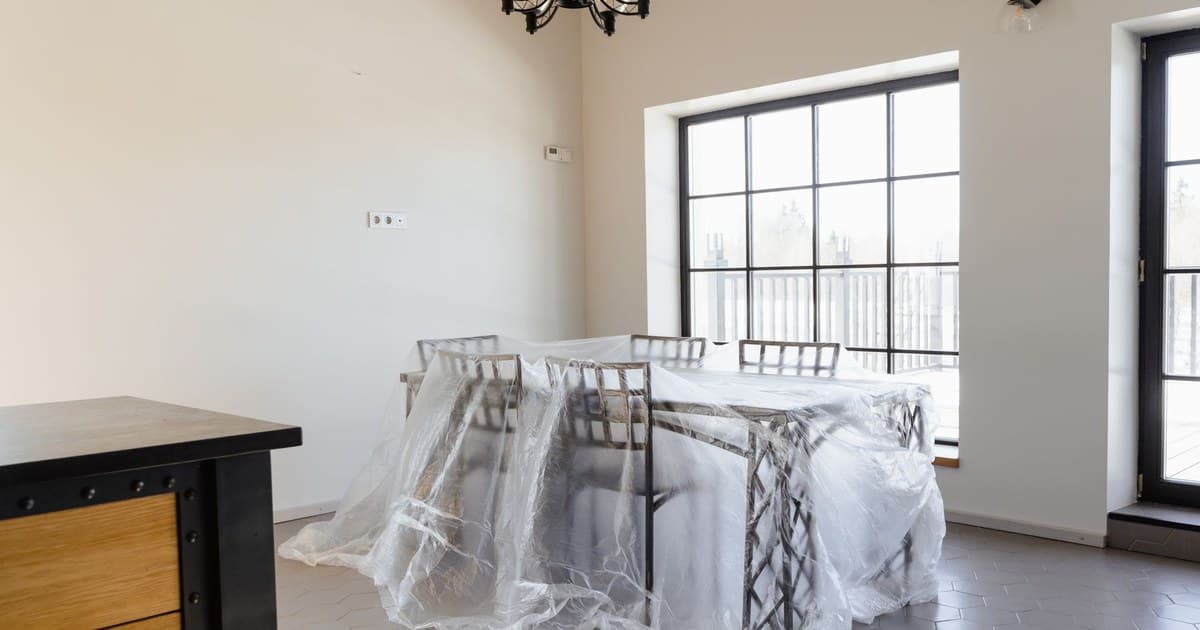
Knowing how to prepare for pest control treatment is worth more than most households realise. Preparation takes about half an hour, it materially affects the result, and the single most common mistake is doing too much of the wrong kind. Cleaning thoroughly the morning of the visit erases the evidence the technician needs to find the harbourage.
Key Takeaways
- Do not deep clean before the visit. Droppings, smear marks and frass are the map a technician works from.
- Open access to cabinet backs, appliance gaps, sink units and floor traps. That is where treatment goes, not the open floor.
- Cover or remove food, utensils, pet bowls and aquariums. Move floor mats and soft toys out of treated rooms.
- Afterwards, resume normal cleaning immediately but leave treated cracks and hinges alone for about two weeks.
The Mistake Almost Everyone Makes
Households clean before a pest control visit for entirely understandable reasons. It feels like the polite thing to do and it feels like it should help. In practice a thorough clean immediately beforehand is the most common way to reduce the quality of a treatment.
The reason is that a technician diagnoses from evidence. Droppings along a shelf edge trace a feeding route. Smear marks where a wall meets a damp surface indicate a heavily used run. Shed skins confirm breeding on site rather than insects wandering in. Frass below joinery locates infested timber. Sweeping all of that away removes the map.
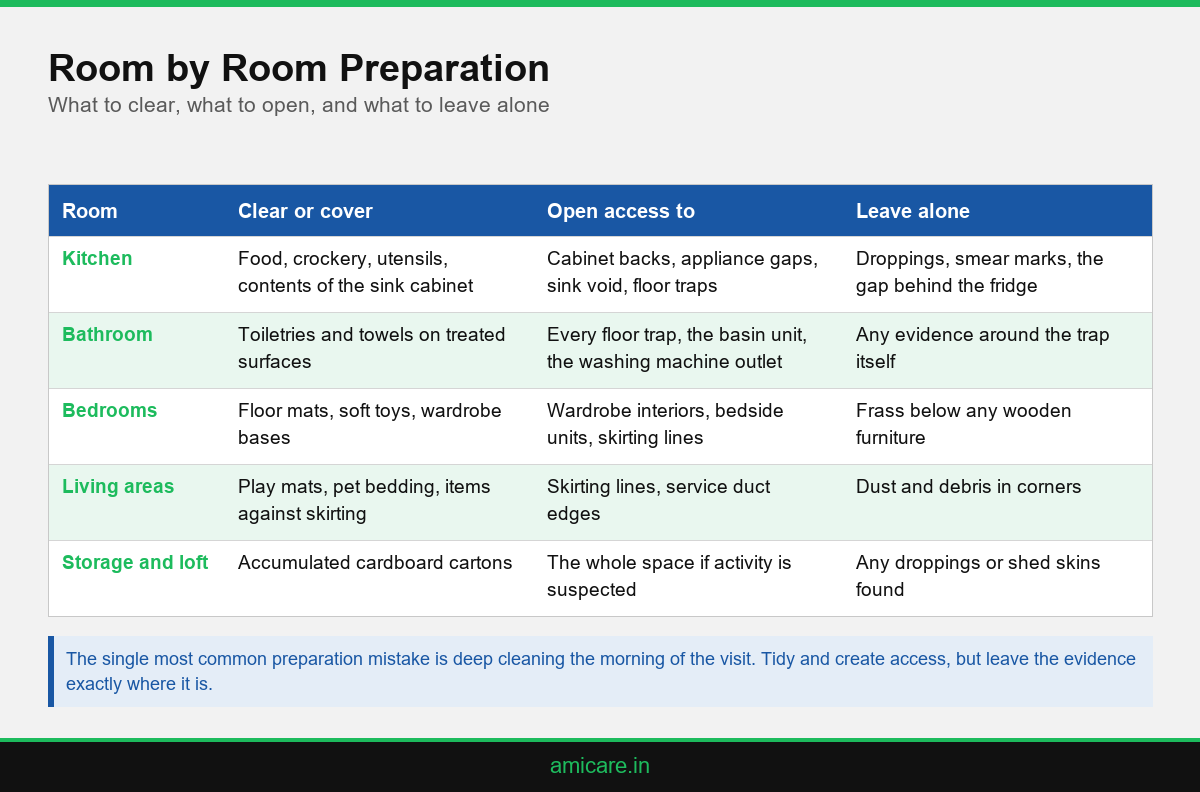
The distinction worth holding is between tidying and cleaning. Clearing clutter, emptying a cabinet and creating access all help. Scrubbing surfaces, vacuuming behind appliances and wiping down cabinet interiors the same morning all hinder. If in doubt, tidy and leave the residue alone.
Kitchen: The Room That Matters Most
The kitchen takes the most preparation because it takes the most treatment. Remove or cover all food, including items in open packets and anything stored in cardboard. Clear crockery, cutlery and utensils from cabinets that will be opened, and cover anything that has to remain on the worktop.
Empty the cabinet under the sink completely. This is one of the highest value harbourage points in any Kerala kitchen and it is routinely inaccessible because it is full of cleaning products and bags. Where you can, pull small appliances forward and create a gap at the wall behind the fridge and the cooking range.
Leave the bin in place but do not empty it into an outside bin immediately before the visit. Its condition is informative. Do not wipe out cabinet interiors or clean the gap behind the fridge, because those are precisely the surfaces where evidence accumulates and where kitchen harbourage builds up unseen.
Where the technician actually needs to reach
Cabinet backs and internal corners, hinge recesses, the gap behind and beneath the fridge, the motor housing of any appliance that will be moved, the void under the sink unit, the junction where units meet the wall, and every floor trap and sink outlet. If those are blocked, the treatment is incomplete regardless of how much product is used.
Bathrooms, Utility and Drains
Bathrooms need less clearing but more access. Move storage racks, buckets and washing machines away from floor traps so every trap can be reached and opened. In Kerala homes this is frequently the step that gets skipped, and it is the reason drain populations survive an otherwise competent visit.
Remove toiletries and towels from surfaces that may receive residual application, and clear the space beneath any washbasin unit. If a bathroom is rarely used, run water into the floor trap the day before so the water seal is present and the technician can see whether it holds.
The utility area deserves the same attention. Behind and beneath the washing machine, the outlet connection and any floor drain in that room are all standard harbourage, and they are usually obstructed by stored items that take two minutes to move.
Bedrooms, Living Areas and Storage
Living areas usually need the least work, but a few things matter. Move floor mats, play mats and children's soft toys out of rooms that will receive any residual application. Pull furniture a short distance from walls where skirting is to be treated, and clear the tops of wardrobes if brown banded activity has been reported.
For bedrooms with suspected activity, clear wardrobe bases and bedside units and leave them open. Where a wooden bed frame or wardrobe is the concern, empty it rather than shifting the contents around, because the technician needs to see joints and undersides.
Storage rooms and lofts are worth a specific mention because they hold the two things that sustain infestations, which are cardboard and undisturbed clutter. Breaking down and removing accumulated cartons before the visit is genuinely useful preparation rather than tidying, and it removes both harbourage and a food source.
People, Pets and Timing
Plan who is in the property and when. Arrange for children, anyone pregnant and anyone with a respiratory condition to be out during application and for a period beyond the stated re entry interval rather than exactly at it. Ask the technician to work through rooms in an order that suits that.
Pets need moving rather than shutting in a treated room. Remove bowls, bedding, toys and litter trays beforehand. Cover the aquarium completely and switch the air pump off. Birds should leave the property rather than move to another room, because their respiratory sensitivity is considerably higher.
Allow enough time. A thorough residential visit typically runs sixty to ninety minutes and longer where drain work or termite drilling is involved. Booking it into a half hour window between other commitments pressures the technician toward the fast version of the job, which is the version that skips inspection.
After the Visit: What to Do and Not Do
Ventilate treated rooms and observe the re entry interval you were given for each area. Then resume normal life, because normal cleaning of floors and worktops is not only permitted but helpful, as it removes competing food and keeps residue off surfaces people use.
The one rule that matters is to leave treated cracks, hinges, cabinet corners and appliance gaps alone for about two weeks. Washing bait out of those locations before the colony has fed through it is comfortably the most common reason a correct treatment underperforms, and it is entirely avoidable.
Expect more visible insects for roughly forty eight hours after gel baiting. That is the product working rather than failing, and sightings should fall steadily from day three. Persisting activity in the same location beyond six weeks is the point at which to call the provider, and that pattern is covered in what to do when cockroaches keep returning.
Keep a short record
Note the date, which rooms were treated, what you were told not to clean and when the follow up visit falls. If the problem persists this record is what lets a technician distinguish a placement gap from a cleaning mistake, and it saves repeating an inspection that has already been done.
Preparation for Termite Work Is Different
Termite treatment on a finished property is a construction style job rather than a light touch visit, and preparing for it as though it were a cockroach treatment leads to a wasted appointment.
The core requirement is clear access along the base of internal walls, because drilling runs the full perimeter of treated rooms at set intervals. Furniture needs moving well away from skirting rather than shifted a few inches, and heavy items should be dealt with before the technician arrives rather than during the visit.
Expect noise and dust. Drilling into masonry and flooring is loud and produces fine debris, so cover or remove soft furnishings, electronics and anything that should not be dusted. Externally, clear planters, stored materials and stacked items away from the plinth so the perimeter can be reached along its whole length.
Plan for the duration too. A typical independent house takes most of a day and sometimes two, which is a different proposition from an hour long kitchen visit. Arrange for children and pets to be elsewhere for the working day rather than for a short interval, and expect the drilled points to be sealed and made good before the technician leaves.
Conclusion
Preparation is about access and evidence rather than appearance. Open up the cabinets, the appliance gaps and the floor traps, move the food, the pets and the floor mats, and leave the droppings and the dust where they are. Then afterwards resume normal cleaning but leave the treated cracks alone. Ask Amicare for a preparation list for your property when the visit is booked.
Frequently Asked Questions
Should I clean before pest control arrives?

What do I need to move before the visit?
How long does the treatment take?
Do I need to empty my kitchen cabinets?
Can I stay in the house during treatment?
When can I clean after the treatment?
Why are there more insects after treatment?
Should I empty the bin before the technician comes?
What if a room is locked or inaccessible?
Does preparation differ for termite treatment?