Cockroaches in Fridges, Microwaves and Electronics
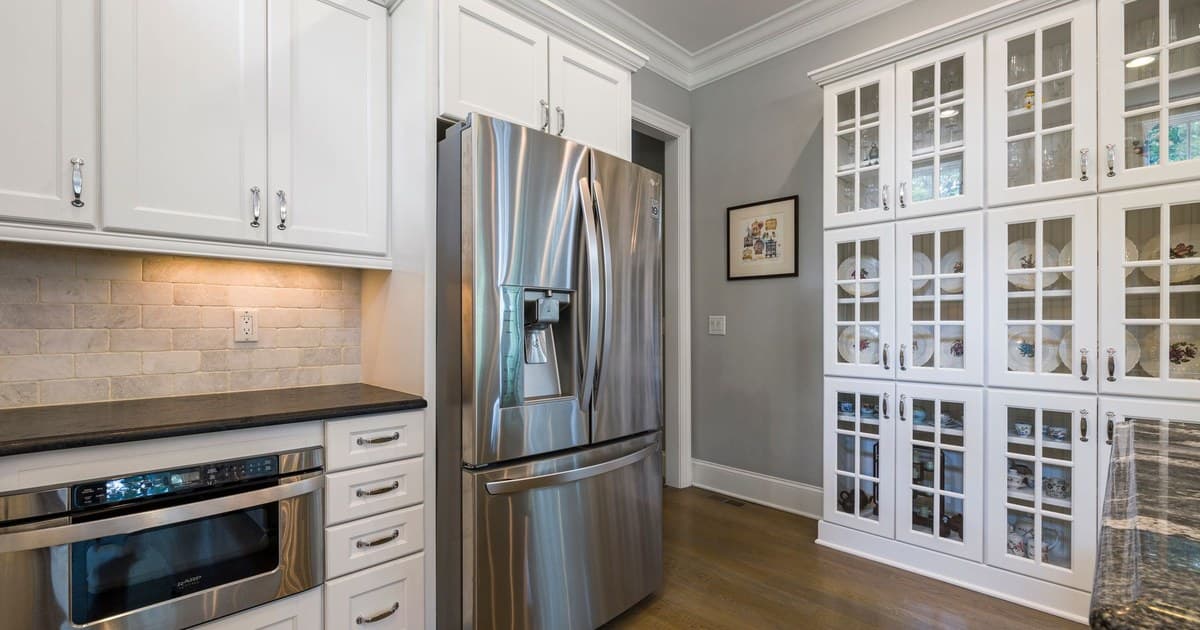
Cockroaches in appliances are among the most persistent and least treated harbourage points in a Kerala kitchen. A fridge compressor bay, a microwave vent and even a wifi router offer exactly what a German cockroach population needs, which is continuous warmth, darkness, tight spaces and a surface nobody ever cleans. Treating the room around them achieves very little.
Key Takeaways
- Appliance housings offer continuous warmth, darkness and tight harbourage, which is close to ideal for German cockroaches.
- The compressor bay behind a fridge is the single most productive harbourage point in most Kerala kitchens.
- Treatment means bait placed into the appliance gaps, not spray around the appliance. Access must be opened.
- Electronics infestations damage equipment through droppings and corrosion, not just through the insects themselves.
Why Appliances Are Nearly Perfect Harbourage
German cockroaches select harbourage on four criteria. Warmth, darkness, tight contact on multiple surfaces, and proximity to food and moisture. Appliance housings deliver all four simultaneously and continuously, which very few other locations in a home manage.
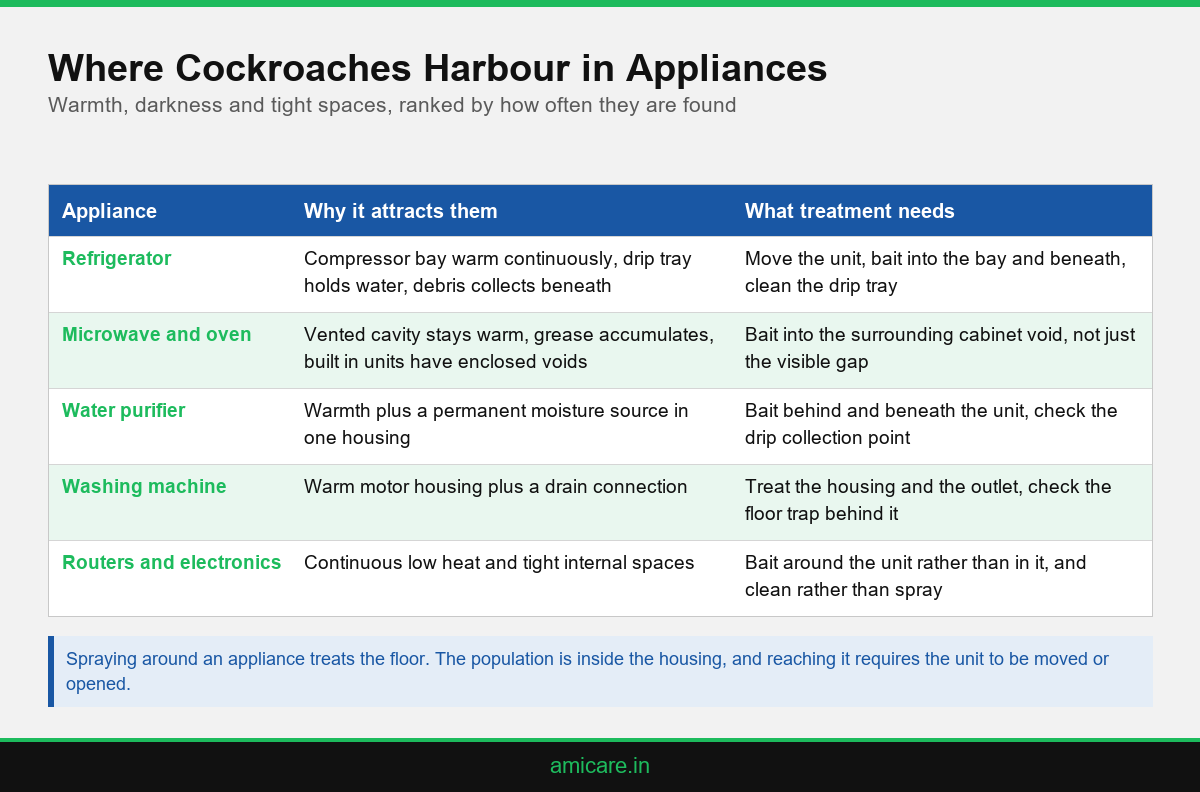
A refrigerator compressor bay runs warm around the clock, sits in darkness, contains a dense tangle of components offering tight contact, and collects food debris and condensation. A microwave has a vented cavity that stays warm after use and accumulates grease. A water purifier combines warmth with a permanent moisture source.
The result is that these locations sustain a population through conditions that would suppress it elsewhere. They are also almost never cleaned, which means debris and allergen accumulate undisturbed, and the harbourage becomes more attractive over time rather than less.
The Appliances That Matter Most
The refrigerator is the highest value location by a considerable margin. Both the compressor bay at the back and the drip tray beneath it are standard harbourage, and the drip tray adds standing water. Any technician who does not move the fridge has not inspected the kitchen properly.
Microwaves, ovens and toasters follow. Built in units are worse than freestanding ones because the surrounding cabinet void is enclosed and inaccessible. Water purifiers and dispensers combine warmth and permanent moisture. Washing machines and dishwashers add a drain connection to the same profile.
Electronics extend the pattern beyond the kitchen. Wifi routers, set top boxes, gaming consoles, desktop computers and television backs all run warm continuously and contain exactly the tight dark spaces cockroaches prefer, which is why bedroom and living room infestations often centre on them.
How You Know They Are There
Look for droppings first. German cockroach droppings resemble coarse ground pepper and collect along the top edges and rear surfaces of appliances, around vents and in the recess where the fridge sits. Pull the unit forward and look at the wall behind it as well as the appliance itself.
Smear marks are the second sign, appearing as dark irregular streaks where the appliance meets a wall or floor in a damp area. Shed skins near a vent confirm breeding rather than passing traffic. A musty smell that is strongest near a specific appliance is a further indicator.
Behaviour helps too. Insects that scatter toward an appliance rather than away from it when a light comes on are telling you where the harbourage is. So is a pattern of sightings that concentrates around one unit rather than distributing across the room.
Why Standard Treatment Misses Them
A fast visit treats the room. It sprays skirting, wipes bait along a worktop edge and leaves. The appliances are not moved, the compressor bay is never opened and the population inside is untouched. Sightings drop for a week as foraging insects are killed and then return from a reservoir that was never addressed.
The physical problem is access. Treating an appliance properly means moving it, which takes time and effort, and built in units are worse still because the cabinet void behind them may need a panel removed. Quotations trimmed on price are trimmed here first, because it is the most labour intensive part of a kitchen treatment.
Spraying is also the wrong method even where it does reach. Repellent product drives a German colony out of one housing and into the next appliance along, which spreads the problem rather than solving it. This is the mechanism behind infestations that return after an apparently successful treatment.
What Correct Treatment Looks Like
The unit is moved or opened. Bait is placed as small deposits into the gaps, seams and voids of the housing rather than on external surfaces, and around rather than inside electronics. The wall and floor behind the appliance are treated, and the fridge drip tray is emptied and cleaned.
Where the appliance is built in, the surrounding cabinet void is treated, if necessary by removing a plinth or a back panel. Insecticidal dust suits these enclosed voids well, because it persists far longer than a liquid and reaches spaces bait placement cannot.
Cleaning follows treatment rather than preceding it. Once the population is cleared, the accumulated grease and debris should be removed, because that is what makes the location attractive and it is also where allergen accumulates. Doing this before treatment simply disperses the insects.
What you can do yourself, safely
Pull the fridge forward every few months and clean behind and beneath it, including the drip tray. Wipe out the microwave cavity and its vent surround. Keep the gap behind appliances clear of stored items. None of this requires chemicals, and it removes both food and harbourage attractiveness.
What not to do
Do not spray insecticide into an appliance housing or into electronics. It is an electrical hazard, it can damage the unit, and it drives the population into adjacent equipment. Baiting placed around the unit by a technician is the appropriate approach.
Cockroaches and Equipment Damage
Beyond the pest problem there is a genuine equipment cost, and it is one households discover late. Droppings and body fluids on circuit boards are conductive and corrosive, and an infestation inside a router, set top box or control board can cause intermittent faults that look like ordinary component failure.
Appliance service engineers encounter this regularly. A fridge control board or a washing machine module that fails prematurely in a home with a cockroach problem is a familiar pattern, and the repair is often charged as a normal fault because the underlying cause is not obvious once the technician has cleaned the board.
This changes the economics of treatment. The cost of clearing an appliance harbourage is usually less than a single control board replacement, and considerably less than the cumulative cost of repeated faults across several units. It is a reasonable argument for treating properly rather than repeatedly cheaply.
Stopping Them Coming Back to the Same Places
Appliance harbourage rebuilds faster than most other locations, because the conditions that made it attractive are permanent. The compressor still runs warm, the void is still dark and enclosed. What you can change is the food, the moisture and the access.
Cleaning is the highest value habit and the most neglected. Pull the fridge out every few months and clean the coils, the recess and the wall behind it, and empty and wash the drip tray, which is standing water in a warm dark space and does more to sustain a population than most people realise. Wipe the microwave vent surround rather than only the interior.
Reduce the access. Close the gaps where a built in unit meets its cabinet, seal the pipe collar behind a washing machine and keep the space behind appliances clear rather than using it for storage. Every carton stored in that gap is both harbourage and food.
Then keep the surrounding kitchen unattractive. Clear overnight residue, avoid leaving pet food out, empty the bin before bed and store provisions in sealed containers rather than open packets. None of this eliminates an established population, but it decides how quickly one rebuilds after treatment, which is the difference between a quarterly cycle holding and failing.
Conclusion
If sightings in your kitchen cluster around the fridge or a built in oven, the population is inside the housing rather than in the room. That harbourage needs the unit moved, bait placed into the gaps and the void behind it treated. A visit that does not move a single appliance has not treated the kitchen. Ask Amicare to include appliance harbourage in the scope when the treatment is quoted.
Frequently Asked Questions
Why are there cockroaches behind my fridge?

Can cockroaches live inside a microwave?
Do cockroaches damage electronics?
Should I spray insecticide into my appliance?
How do I know if the fridge is the source?
Why did treatment not stop the problem?
Can I clean the harbourage myself?
Are built in appliances worse than freestanding ones?
Do cockroaches get into washing machines?
Does this apply to bedrooms as well?