Cockroach Allergens and Childhood Asthma in Kerala Homes
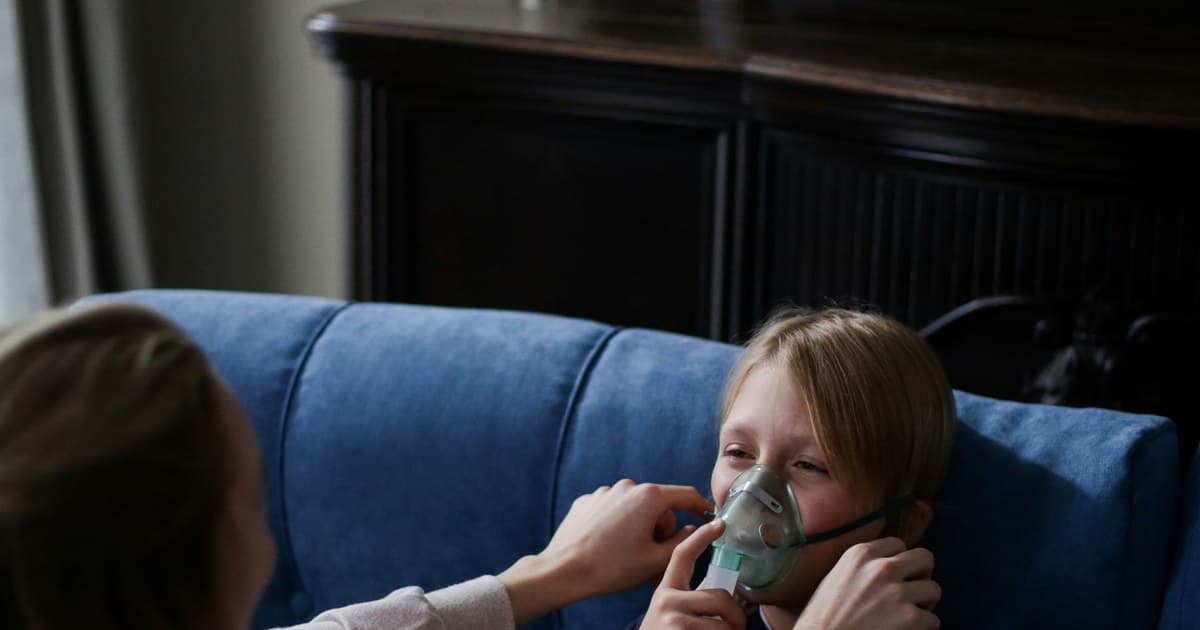
Cockroach health risks are usually discussed as a hygiene matter, which understates them considerably. The stronger case is respiratory. Cockroach allergens are among the most significant indoor asthma triggers identified in children, and in a humid climate like Kerala's the exposure is both common and persistent. This matters for how a treatment should be judged.
Key Takeaways
- Cockroach allergen is a documented asthma trigger in children, not a general hygiene concern.
- The allergen comes from droppings, shed skins and body fragments, so it persists after the insects are killed.
- Killing the population is half the job. Removing the accumulated debris from harbourage is what lowers exposure.
- Cockroaches also transfer pathogens mechanically between drains and food surfaces, which is a separate risk again.
What the Allergen Actually Is
The allergens are proteins found in cockroach droppings, shed skins, saliva and body fragments. As these accumulate in harbourage they dry, break down into fine particles and become part of household dust, which is how they reach the airways of the people living there.
This mechanism explains something households find counterintuitive. You do not need to see cockroaches to be exposed to their allergen. A population living inside a wall void or behind a fitted unit produces allergen continuously, and it disperses through the room without any insect being visible.
It also explains why the exposure does not end when the insects do. Killing a population removes the source of new allergen but leaves everything already accumulated in place. The review on cockroaches and allergic disease sets out how these proteins provoke sensitisation and symptoms in exposed individuals.
Why Children Are Most Affected
Children are more exposed for the same reasons that apply to any household contaminant. They spend time on floors where settled dust concentrates, they breathe closer to the ground, they handle and mouth objects, and their intake relative to body weight is higher than an adult's.
Sensitisation is the specific concern. Repeated early exposure can lead to the immune system treating the protein as a threat, after which subsequent exposure provokes a response. Once a child is sensitised, comparatively small amounts of allergen can trigger symptoms, which is why reducing background exposure matters more than eliminating occasional contact.
Public health guidance on asthma and its environmental triggers consistently lists indoor pest allergens among the controllable exposures, and material from respiratory health organisations on asthma triggers takes the same view. The word controllable is the important one.
What parents actually notice
Symptoms that worsen indoors and improve when the family is away. Night time coughing or wheezing that clusters in particular rooms. A child whose asthma is harder to control at home than at school. None of these are diagnostic on their own, but together with any evidence of cockroach activity they are worth raising with a doctor.
Why Kerala Homes Carry Higher Exposure
Two local factors raise the baseline. The first is climate. Year round humidity and warm nights remove the seasonal pause that would otherwise interrupt cockroach breeding, so populations sustain themselves continuously and allergen accumulates without a break.
The second is building form. Apartment stock built around shared plumbing risers and common service ducts lets populations move between units, which means exposure in a scrupulously clean flat can originate two floors away. Housekeeping determines how attractive a home is once cockroaches arrive and has much less influence on whether they arrive.
The combination is why treating this as a cleanliness issue misreads it. Allergen load in a Kerala flat is substantially a function of the building and the climate, which is the same reasoning behind how Kerala conditions shape household pest pressure more generally.
The Other Health Risk: Mechanical Transfer
Separate from allergens, cockroaches move between environments that should never be connected. An American cockroach living in a drain line forages across kitchen surfaces at night, carrying organisms from the sewer connection on its legs and body and depositing them where food is prepared.
This is mechanical transfer rather than the insect being infectious itself, and it is why the species matters. A German population living inside kitchen cabinets moves within the kitchen. A drain dwelling American population commutes between the sewer and the worktop, which is a materially different contamination profile.
The practical consequence is that drain treatment is a health measure and not merely a comfort one. A kitchen focused visit that leaves the pipe run untreated addresses the visible problem and leaves the contamination route intact, which is the same pattern seen with other pests that travel from waste areas into living space.
What Actually Reduces Allergen Load
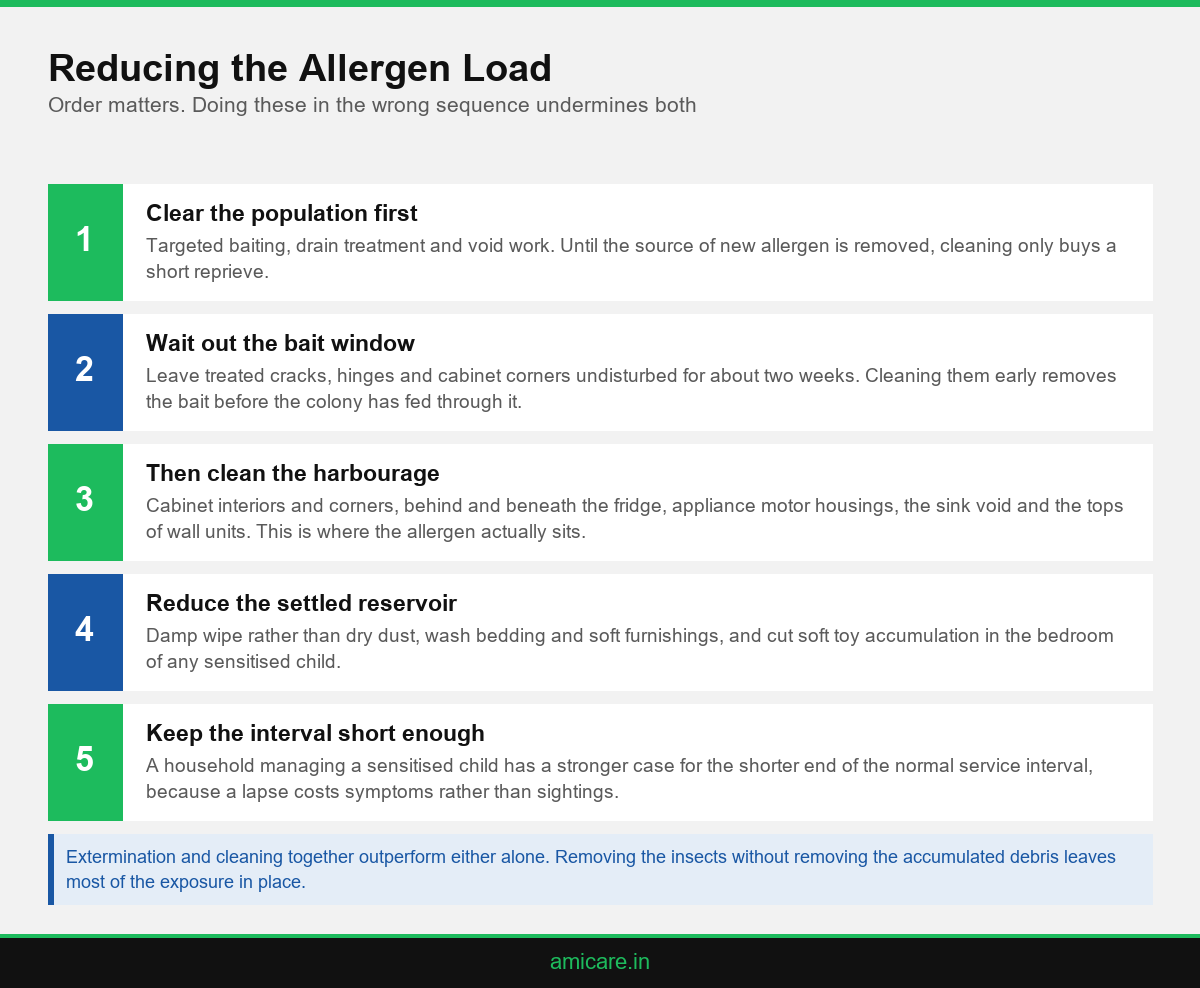
Eliminating the population is the necessary first step and it is not sufficient on its own. Because the allergen sits in accumulated debris, the second step is removing that debris from the places it has collected, which are exactly the places nobody cleans.
After treatment has taken effect, and after the two week window in which treated cracks should be left alone, the harbourage itself should be cleaned. Cabinet interiors and corners, the gap behind and beneath the fridge, appliance motor housings, the void under the sink unit and the tops of wall units are the priority locations.
Beyond that, reduce settled dust in the rooms where a sensitised child spends most time. Damp wiping rather than dry dusting, washing soft furnishings and bedding, and reducing soft toy accumulation in the bedroom all lower the reservoir. Research on pest allergen exposure and abatement in housing indicates that combined extermination and cleaning outperforms either alone.
Sequence matters
Do not deep clean harbourage during the first fortnight after baiting, because that removes the bait before the colony has fed through it. Clear the population first, then clean the harbourage thoroughly. Doing it in the wrong order compromises the treatment and leaves the allergen behind anyway.
Talking to Your Provider About a Household With Asthma
Say it at quotation stage. A household with an asthmatic child should be treated differently, and a provider who knows in advance can plan for it rather than improvising on the day.
Three things should change. Method selection shifts firmly toward bait, dust and exclusion and away from broadcast spraying, because airborne product is a specific concern for a reactive airway. Sequencing changes so the affected person is out of the property during application and for longer than the minimum stated interval. And the scope should explicitly include drains and voids rather than stopping at the kitchen.
The third change is the one most often omitted, and it is arguably the most important. Ask whether harbourage cleaning is included or advised as a follow up, and when it should happen relative to the treatment. A provider who treats allergen load as part of the objective rather than a side effect is approaching the problem correctly.
Keeping the Allergen Down Long Term
Clearing a population once lowers the allergen load. Keeping it down requires that the population does not rebuild, which in a Kerala flat means accepting that this is an ongoing management task rather than a single event.
The interval matters more in a household with an asthmatic child than in an average one. Where a typical apartment might run a three to four month cycle, a household managing a sensitised child has a stronger case for the shorter end of that range, because the cost of a lapse is measured in symptoms rather than in sightings.
Monitoring bridges the gap between visits. Simple sticky monitors placed under the sink, behind the fridge and near floor traps turn guesswork into evidence, showing whether activity is rising well before anyone sees an insect in daylight. For a household with a specific health reason to act early, that early warning is worth having.
Alongside that, the routine that genuinely helps is unglamorous. Keep the fridge recess and appliance gaps clean, remove cardboard promptly, maintain water seals in unused floor traps and damp wipe rather than dry dust in the bedroom. None of it replaces treatment, and together it meaningfully reduces both the population pressure and the settled reservoir.
Conclusion
Cockroach control in a household with an asthmatic child is a respiratory intervention as much as a pest one, and it should be judged that way. Remove the population, then remove the accumulated debris from the harbourage, and prioritise targeted methods over spraying throughout. Tell Amicare if someone in the household has asthma so the treatment plan reflects it.
Frequently Asked Questions
Can cockroaches actually cause asthma?

Where does the allergen come from?
Do I need to see cockroaches to be exposed?
Does killing the cockroaches remove the allergen?
Which rooms matter most for an asthmatic child?
Are cockroaches a contamination risk as well?
Is spraying or baiting better in an asthmatic household?
When should I clean the harbourage?
Does housekeeping prevent the problem?
Should I tell the pest control provider about the asthma?