Pre-Construction Anti-Termite Treatment in Kerala - What You Must Know Before Building
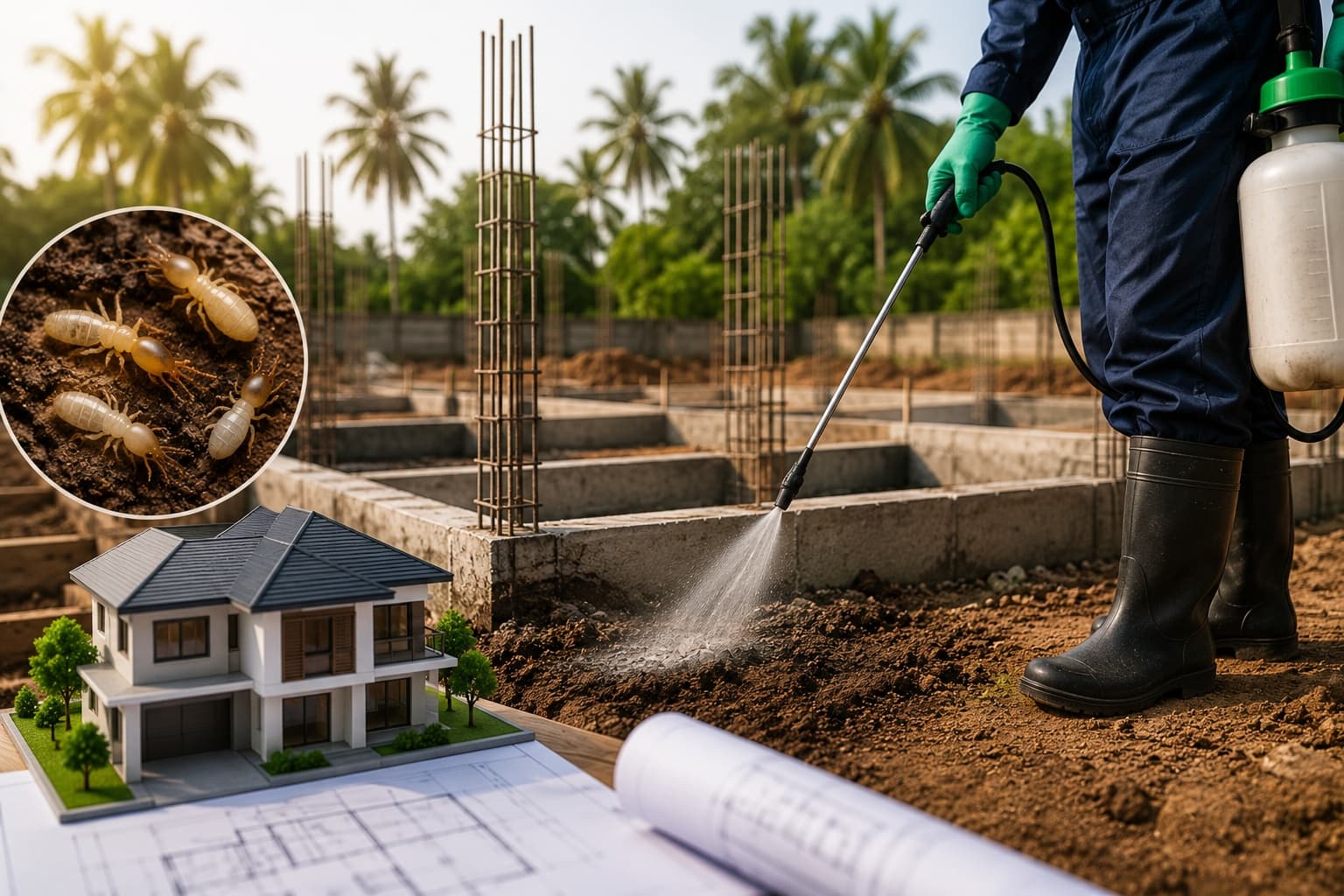
If you are about to build a home in Kerala, there is one decision that quietly determines whether termites will be a lifelong problem or a non-issue: whether you invest in pre construction termite treatment Kerala experts recommend before the foundation is sealed. Skip this step, and even the sturdiest structure remains exposed to subterranean termites that can travel silently through the soil for years before any damage becomes visible.
This is the single most cost-effective window you will ever have to protect your home from termites, and once construction is complete, that window closes for good.
Why Pre-Construction Termite Treatment Matters So Much in Kerala
Kerala's combination of high humidity, heavy monsoon rainfall, and moisture-retentive laterite soil creates near ideal conditions for subterranean termite colonies. These termites live underground and build mud tunnels to reach the wood and cellulose materials inside a structure. Because the soil around a building site is fully exposed before construction, this is the only stage at which a continuous chemical barrier can be created around and beneath the entire foundation.
Once flooring, plastering, and finishing work are done, that same soil becomes inaccessible. Any treatment applied later has to work around what is already built, which is inherently less thorough than treating open ground. This is why pre construction termite treatment Kerala builders increasingly insist on is treated as a standard part of the construction process rather than an optional add-on.
When in the Construction Timeline It Happens
Pre-construction treatment is not a single event, it typically happens in stages that align with the building process:
After excavation, before the foundation is laid: The exposed soil at the base of the excavated pit is treated first, creating the initial barrier layer.
Around the foundation and plinth: As the foundation walls go up, the soil immediately surrounding them is treated to prevent termites from entering through the sides.
Before backfilling: Once the foundation structure is in place, the soil used to backfill around it is treated again before it is packed in, ensuring there are no untreated gaps.
Around the final plinth level: A final treatment is often applied around the completed plinth as a last line of defence before flooring work begins.
This staged approach means the treatment needs to be planned and coordinated with your contractor or builder well in advance, ideally before excavation even starts.
What the Treatment Process Involves
A professional pre construction termite treatment Kerala team will typically begin with an assessment of the soil type, plot layout, and construction plan. From there, the treatment focuses on creating a continuous chemical barrier across three main zones: the base of the excavated foundation, the sides of the foundation walls, and the area immediately around the plinth. All chemicals used should comply with Central Insecticide Board, or CIB, guidelines, ensuring the products are approved for this specific application and applied at the correct concentration.
At Amicare, this process is carried out by in-house, full-time technicians who follow a documented protocol at each construction stage rather than a single blanket application. Because Amicare is ISO Certified and holds a Commercial Pest Control Operations License from the Directorate of Agriculture, Kerala, the treatment plan and chemical usage are handled with the kind of accountability that matters when the work is being buried under your future home.
Why It's Cheaper and More Effective Than Post-Construction Treatment
There are two reasons pre-construction treatment consistently comes out ahead of waiting until later.
First, it is more effective. A continuous soil barrier applied to open ground gives complete coverage, while post-construction treatment has to work through drilled holes placed at calculated intervals, which is a good solution once needed but never as complete as treating open soil directly.
Second, it is more economical over the life of the building. Pre-construction treatment is a planned, one-time process built into your construction budget. Post-construction treatment, by contrast, is a reactive cost, often needed after damage has already occurred, sometimes requiring repair work in addition to the pest treatment itself. If an infestation does take hold after construction, our guide, "Post-Construction Termite Treatment: Save Your Home Before It's Too Late," explains what that process involves and why it should not be delayed once needed.
For a broader look at how termite risk, treatment types, and costs fit together across a home's lifetime, our complete guide, "Termite Control in Kerala: The Complete Homeowner's Guide," covers the full picture, from identifying termite species to understanding pricing. You can also view our full termite control service details, including pre-construction packages.
A Note on Timing With the Monsoon
If your construction timeline allows for it, completing pre-construction treatment before the pre-monsoon months of May and June is worth planning for. This is when rising humidity triggers termite swarming season across Kerala, and having your foundation barrier already in place before soil moisture peaks gives the treatment the best possible conditions to hold.
Get It Right the First Time
Pre-construction termite treatment is difficult and expensive to correct if done poorly, since by the time problems surface, the treated soil is already buried under a finished structure. Choosing a provider that is ISO certified, government licensed, and staffed by in-house technicians rather than subcontractors gives you a documented, accountable process rather than a one-time spray you have to simply trust. Contact Amicare today for a free inspection and consultation before your construction begins.
Frequently Asked Questions
What is pre-construction termite treatment?

It is the application of termite-resistant chemical treatment to the soil at the foundation stage of construction, before the building is completed, creating a continuous barrier that protects the structure from subterranean termites for years.
When exactly should pre-construction termite treatment be done?
It should be carried out in stages, starting after excavation and continuing through foundation laying, backfilling, and plinth completion, all before flooring and finishing work begins.
Does pre-construction treatment affect the soil quality or nearby plants?
When applied by a licensed operator using CIB-approved chemicals at the correct concentration and application method, the treatment is designed to target termite activity without posing a broader environmental hazard to the site.
Who should coordinate the treatment, me or my contractor?
Either can coordinate it, but it is important that whoever manages the construction timeline informs the pest control company well in advance so treatment stages align with excavation, foundation, and backfilling work.
What happens if I move into a home that never had pre-construction treatment?
You are not without options, but the approach shifts to post-construction treatment, which involves drilling and chemical injection at the foundation level of the completed structure to establish a barrier retroactively.
How much does pre-construction termite treatment cost?
Cost depends on plot size, foundation design, and soil conditions. It is generally more economical than post-construction treatment since it is planned and applied to open soil rather than a finished structure.
Does Amicare provide a warranty for pre-construction termite treatment?
Amicare's treatments are backed by documented service terms, and as an ISO certified, government licensed provider using in-house technicians, the process is designed for long-term accountability. Contact Amicare directly for the specific warranty terms applicable to your project.
Can pre-construction treatment be skipped if I plan to treat the home later?
It can be skipped, but post-construction treatment is less thorough since the soil is no longer fully accessible, and it is typically more expensive and reactive rather than preventive.
Is pre-construction termite treatment mandatory in Kerala?
While not universally legally mandated for private residential construction, it is strongly recommended given Kerala's climate, and many builders and contractors now include it as a standard practice.
How long does pre-construction termite treatment last?
With correct application by a licensed provider, the barrier is generally designed to protect the structure for several years, though periodic inspection is still advisable, particularly in high-risk areas.