Post-Construction Termite Treatment in Kerala - Save Your Home Before It's Too Late
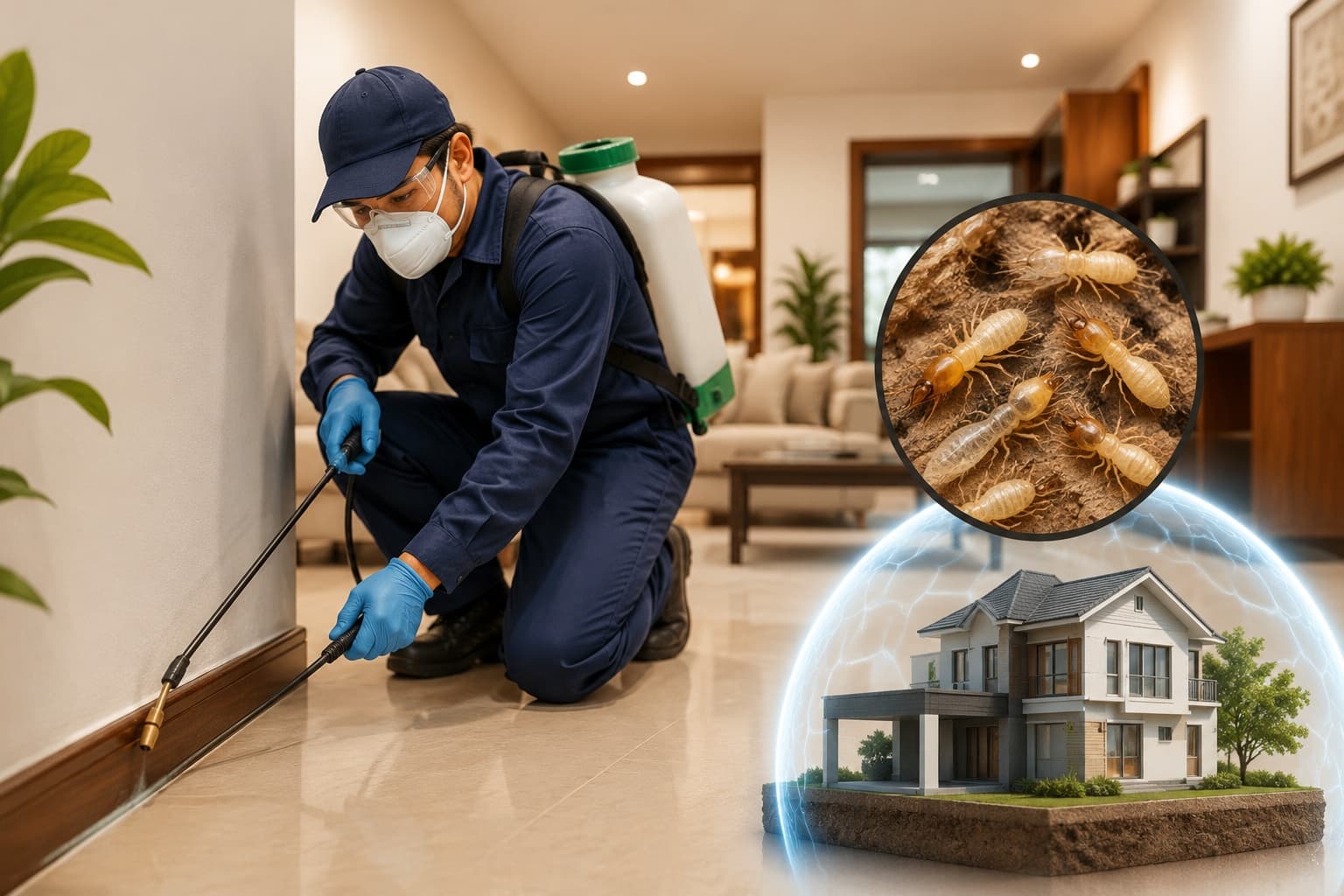
By the time most homeowners search for post construction termite treatment Kerala providers, the problem is no longer hypothetical, it is already visible, in the form of mud tubes along a wall, hollow-sounding skirting, or a swarm of winged termites near a window. If you are a homeowner in Kochi facing an active termite infestation in a home that is already built and occupied, waiting any longer only gives the colony more time to spread through your structure.
Unlike pre-construction treatment, which is applied to open soil before a building exists, post-construction treatment has to work with a completed structure, finished flooring, and an occupied living space. Done correctly by a licensed team, it is still highly effective, but it needs to be handled with precision.
Signs You Need Post-Construction Termite Treatment in Kerala
Termite infestations in existing homes rarely announce themselves loudly at first. Watch for:
Mud tubes: Thin, pencil-width tunnels made of soil and saliva running along walls, foundations, or pillars, used by subterranean termites to travel between soil and wood while avoiding exposure.
Discarded wings: Small, uniform wings shed near windows, doors, or light fixtures after a termite swarm, often the first visible sign for many Kochi households, especially around the pre-monsoon swarming season in May and June.
Hollow-sounding wood: Door frames, skirting boards, or furniture that sound papery or hollow when tapped, indicating the wood has been hollowed out from within.
Blistering or bubbling paint: Sometimes mistaken for moisture damage, this can indicate termite activity just beneath the painted surface.
Sagging floors or ceilings: In more advanced infestations, structural timber or supports may have been weakened enough to cause visible sagging.
Frass or termite droppings: Small, pellet-like droppings near wooden structures, more commonly associated with drywood termites.
If you notice any of these signs in your Kochi home, or anywhere else in Kerala, an inspection sooner rather than later can be the difference between a contained treatment and extensive structural repair.
The Treatment Process for Already-Built Homes
Since the foundation of a completed home is no longer exposed, post construction termite treatment Kerala professionals use a method built around targeted access points rather than open soil application.
Step 1: Inspection
A technician inspects the property to identify the extent of the infestation, the termite species involved, entry points, and any structural risk areas. This determines exactly where treatment needs to be focused.
Step 2: Drilling and Chemical Injection
Small holes are drilled at carefully calculated intervals along the foundation, skirting, and other identified entry zones. A chemical solution is injected into these holes to create a continuous barrier beneath and around the structure, replicating, as closely as possible in an already-built home, the kind of protection pre-construction treatment achieves on open soil.
Step 3: Sealing and Surface Treatment
Once the injection is complete, the drill holes are sealed, and any visibly infested wood, furniture, or fittings receive direct treatment. All chemicals used follow Central Insecticide Board guidelines, and for indoor applications, HACCP-certified chemicals are used, which matters in kitchens, dining spaces, and homes with children or pets.
Step 4: Follow-Up Monitoring
Because a subterranean colony can be extensive and slow to fully eliminate, a follow-up inspection is typically recommended to confirm the treatment has worked and to catch any early signs of recurrence.
At Amicare, this entire process is handled by in-house, full-time technicians, not subcontracted labour, and the company's ISO certification and government-issued Commercial Pest Control Operations License mean the work follows a documented, accountable protocol rather than guesswork, something that matters greatly when chemicals are being applied inside an occupied home.
Why DIY Doesn't Work
It is tempting to reach for a store-bought termite spray or powder the moment you spot a mud tube, but DIY treatments almost always fall short for one core reason: they only affect the termites they directly touch. A subterranean termite colony can contain hundreds of thousands of individuals living underground, and spraying visible surface activity does nothing to reach the colony itself. Homeowners in Kochi and across Kerala who rely on DIY products often report the same pattern, the visible activity disappears for a few weeks, then returns, because the underlying colony was never actually addressed.
Professional post-construction treatment is designed specifically to reach the colony's access points into the structure, not just the symptoms visible on the surface. For a full understanding of how termite risk, prevention, and treatment fit together across a home's lifetime, our complete guide, "Termite Control in Kerala: The Complete Homeowner's Guide," is a useful starting point. You can also view full details of our termite control service in Kochi and across Kerala.
Don't Wait Until the Damage Is Structural
An active termite infestation in an occupied home rarely gets better on its own, and the cost of delay is measured in both money and structural integrity. If you are a homeowner anywhere in Kochi or across Kerala noticing mud tubes, hollow wood, or termite swarms, contact Amicare today for a free inspection before the problem spreads further.
Frequently Asked Questions
How do I know if I need post-construction termite treatment?

If you notice mud tubes on walls or foundations, hollow-sounding wood, discarded termite wings, or visible damage to furniture and skirting in an already-built home, these are strong indicators that post-construction treatment is needed.
How is post-construction treatment different from pre-construction treatment?
Pre-construction treatment is applied to open soil before a building is completed. Post-construction treatment works with a completed structure, using drilling and chemical injection at calculated points along the foundation to create a barrier retroactively.
Is drilling into my walls and floors necessary for treatment?
Yes, in most cases small holes are drilled at specific intervals along the foundation or skirting to inject chemical solution beneath the structure, since the soil is no longer directly accessible. Holes are sealed after treatment.
How long does post-construction termite treatment take?
For a typical residential home in Kochi or elsewhere in Kerala, treatment can often be completed within a day or two, though larger properties or more extensive infestations may require additional time.
Will I need to vacate my home during treatment?
Most post-construction treatments are designed to allow occupants to remain in the home, though your technician may recommend keeping certain rooms or areas clear during and shortly after application.
Can termites come back after post-construction treatment?
Recurrence is possible if the original colony was extensive or if new colonies establish nearby, which is why follow-up inspections and warranty-backed service are important parts of a proper treatment plan.
Why doesn't a store-bought termite spray solve the problem?
Store-bought sprays only kill termites they directly contact and do not reach the underground colony that sustains a subterranean termite infestation, which is why visible activity often returns after temporary DIY treatment.
Is post-construction termite treatment safe for children and pets?
When performed by a licensed provider using CIB-approved chemicals, and HACCP-certified products indoors, the treatment is designed to be safe for occupied homes, though it is best to follow any specific guidance your technician provides.
How much does post-construction termite treatment cost in Kochi and Kerala?
Cost depends on the size of the property, extent of the infestation, and accessibility of the affected areas. A free on-site inspection is the most reliable way to get an accurate estimate for your specific home.
What certifications should I check before hiring a post-construction termite treatment company?
Look for ISO certification, a valid Commercial Pest Control Operations License, use of CIB-approved chemicals, membership in bodies like APCO or IPCA, and confirmation that technicians are in-house employees rather than subcontractors.