Dry Wood Termite Treatment in Kerala - How to Protect Your Furniture and Roof
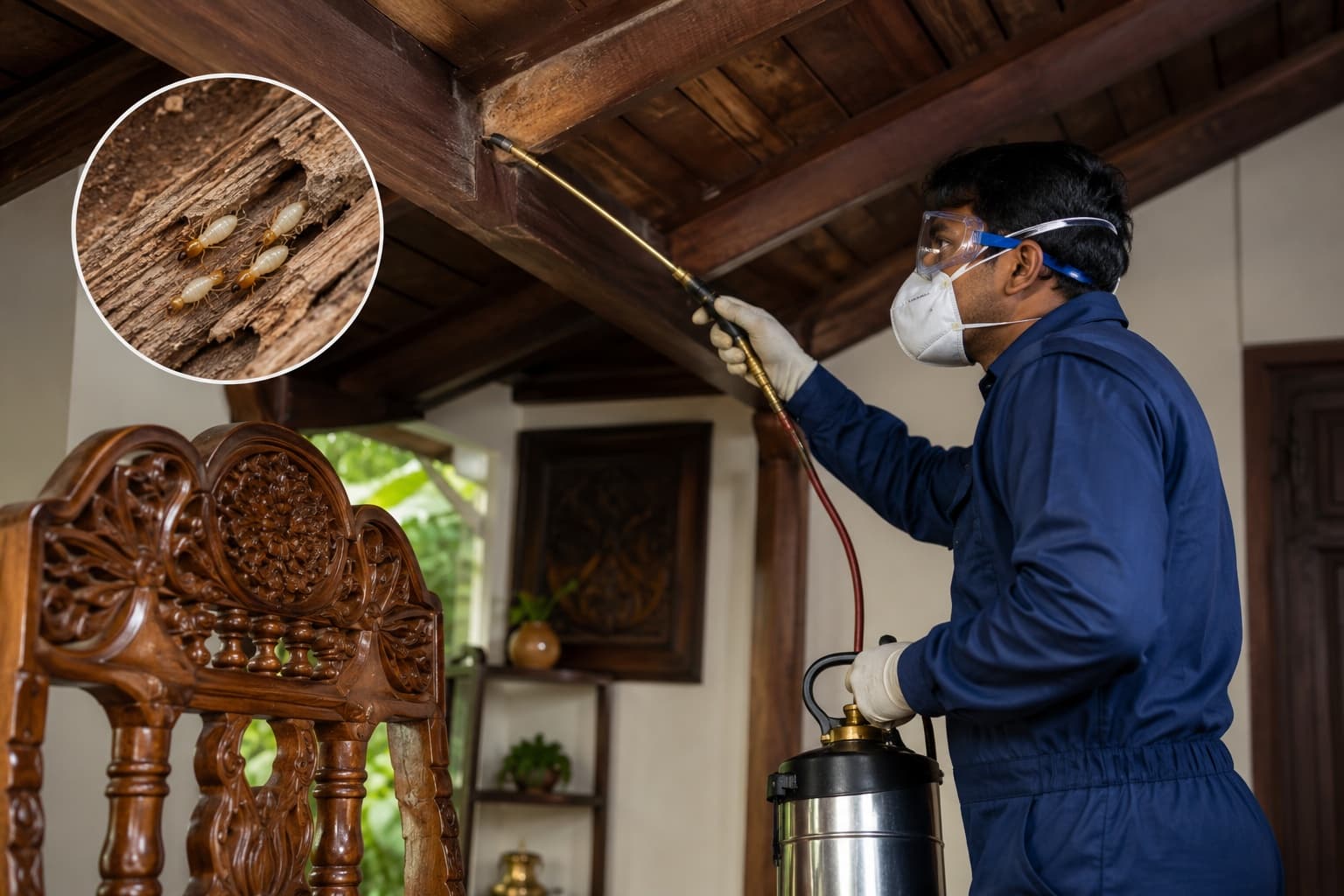
That antique teak cupboard, the wooden roof trusses in a traditional Kerala home, the carved door frame passed down through generations, all of these can be quietly hollowed out from the inside by drywood termites long before any damage is visible from the outside. Dry wood termite treatment Kerala homeowners increasingly search for is specifically aimed at this type of infestation, which behaves very differently from the more commonly discussed subterranean termite problem.
What Drywood Termites Are and How They Differ From Subterranean Termites
Subterranean termites live in soil-based colonies and travel into a structure through mud tubes, which means their presence is often tied to moisture and ground contact. Drywood termites work completely differently. They live entirely inside the wood they consume, whether that is furniture, door and window frames, roof beams, or wall panelling, and they do not need any contact with soil or an external moisture source to survive.
This makes drywood termites significantly harder to detect early. There are no mud tubes to spot along a wall, no obvious trail leading back to an underground colony. Instead, the first sign is often small pellet-like droppings, called frass, near a piece of furniture or beneath a wooden beam, or a piece of wood that sounds hollow and papery when tapped, by which point the internal damage can already be extensive.
Why Furniture and Wooden Roofs in Kerala Homes Are Vulnerable
Kerala's building tradition leans heavily on wood, from carved doors and window frames to full wooden roof trusses in older and heritage-style homes, along with furniture passed down across generations. Several factors make this wood particularly attractive to drywood termites:
Untreated or under-treated timber: Wood that was not properly treated before use in construction or furniture-making offers an easy entry point.
Warm, humid indoor conditions: While drywood termites do not need soil moisture, Kerala's general climate still supports their activity indoors.
Older furniture and structures: Antique or heritage wooden items are often more vulnerable simply due to age, prior minor damage, or untreated surfaces.
Roof trusses and attic spaces: These are rarely inspected regularly, allowing an infestation to progress undisturbed for a long time.
·Imported or reused wood: Wood brought in from elsewhere, or reused from older structures, can sometimes carry an existing infestation into a new setting.
Because the damage is entirely internal until quite late, many homeowners only discover a drywood termite problem when a piece of furniture crumbles under light pressure or a section of roof timber shows visible sagging.
Dry Wood Termite Treatment Methods in Kerala
Effective dry wood termite treatment Kerala specialists use depends heavily on correctly identifying that the infestation is in fact drywood rather than subterranean, since soil-based barrier treatments used for subterranean termites will not reach a colony living entirely inside a wooden beam or cupboard.
Localised Wood Treatment
For infestations confined to specific pieces of furniture, door frames, or sections of a roof structure, targeted chemical treatment is applied directly to the infested wood, aiming to eliminate the colony living inside it without requiring the item to be discarded, where the wood is structurally salvageable.
Injection Treatment for Structural Timber
For roof beams, trusses, and other structural wooden elements, treatment often involves careful injection of approved chemical solution directly into infested sections, targeting the galleries the termites have created inside the wood.
Fumigation for Severe or Widespread Cases
In cases where drywood termite activity has spread extensively through multiple pieces of furniture or a significant portion of a structure, fumigation may be recommended as a more comprehensive solution to reach termites throughout the treated space.
Whichever method applies, all chemicals used follow Central Insecticide Board guidelines, and for indoor applications, only HACCP-certified chemicals are used, which is especially relevant here since drywood treatment often takes place directly on furniture and fittings inside living spaces. At Amicare, this work is carried out by in-house, full-time technicians trained to correctly distinguish drywood from subterranean activity before recommending a treatment plan, backed by the company's ISO certification and government-issued Commercial Pest Control Operations License.
Prevention Tips for Furniture and Wooden Structures
Have wooden furniture and structural timber inspected periodically, particularly older or antique pieces, rather than waiting for visible damage.
Ensure any new wood used in construction or furniture-making has been properly treated before installation.
Keep an eye on roof trusses and attic spaces, which are easy to overlook during routine home upkeep.
Watch for small piles of frass, pellet-like droppings, near furniture legs, window sills, or beneath wooden beams.
Schedule a professional inspection ahead of the pre-monsoon months of May and June, when rising humidity often coincides with increased termite activity and swarming across Kerala.
Address even minor, isolated signs of activity promptly, since drywood colonies can expand within a piece of wood for a long time before becoming obvious.
For a broader understanding of termite risk and treatment options across an entire property, not just furniture and roof structures, our complete guide, "Termite Control in Kerala: The Complete Homeowner's Guide," covers subterranean termites, pre-construction treatment, and post-construction treatment in detail. See full details of our termite control service, which covers drywood and subterranean termite treatment alike.
Protect What You Cannot See
Drywood termite damage is often discovered far later than it should be, simply because the activity happens entirely out of sight inside the wood itself. If you have noticed hollow-sounding furniture, small droppings near wooden fittings, or ageing roof timber that has never been inspected, contact Amicare today for a free inspection before a treasured piece of furniture or a structural roof beam is damaged beyond repair.
Frequently Asked Questions
What is the difference between drywood termites and subterranean termites?

Subterranean termites live in soil-based colonies and travel into structures through mud tubes, requiring ground contact and moisture. Drywood termites live entirely inside the wood they consume and do not need any contact with soil or external moisture.
How can I tell if my furniture has drywood termites?
Signs include small pellet-like droppings called frass near the furniture, a hollow or papery sound when the wood is tapped, and small exit holes on the surface of the wood.
Can drywood termite infestations spread to other furniture in my home?
Yes, drywood termites can spread from one infested piece to nearby wooden items or structures, particularly if untreated wood is in close contact, which is why early inspection and treatment matter.
Is it possible to save furniture that already has drywood termite damage?
In many cases, yes, if the wood is still structurally sound, localised treatment can eliminate the colony living inside without requiring the item to be discarded. Severely damaged pieces may need repair or replacement alongside treatment.
Do I need to remove furniture from my home during treatment?
This depends on the treatment method recommended. Localised treatment can often be done in place, while more severe or widespread infestations may require fumigation, which could involve temporarily relocating certain items.
How do drywood termites get into a home if they don't need soil contact?
They typically enter through infested wood brought into the home, such as reused timber or untreated furniture, or through swarming winged termites that find their way into wooden structures directly, especially during swarming season.
Are wooden roof trusses in older Kerala homes especially at risk?
Yes, roof trusses and attic spaces are rarely inspected regularly, which allows drywood termite infestations to progress undetected for extended periods, making periodic inspection particularly important for older and heritage-style homes.
What treatment method is used for roof beams versus furniture?
Furniture and door frames are often treated with localised chemical application, while structural timber such as roof beams may require injection treatment directly into infested sections. Severe, widespread cases may call for fumigation.
Is dry wood termite treatment safe for indoor use around family members?
When carried out by a licensed provider using CIB-approved chemicals, and HACCP-certified products for indoor applications, the treatment is designed to be safe for occupied homes and furnished spaces.
How often should I get my furniture and wooden structures inspected for drywood termites?
Periodic inspection, ideally at least once a year and especially ahead of the pre-monsoon months of May and June, is advisable, particularly for older furniture, antique pieces, and wooden roof structures that are not part of daily visual inspection.